Introduction
A residential kitchen faucet might get used a few dozen times a day. A commercial kitchen faucet in a busy hotel or restaurant gets used hundreds of times, across multiple shifts, often by different staff members, with far less patience for a stiff sprayer or a hose that kinks under pressure. That difference in daily demand is exactly why sourcing faucets and hoses for a commercial kitchen needs a different set of priorities than furnishing a home.
This guide covers what actually matters when choosing commercial kitchen faucets and hoses for a restaurant, hotel, or institutional kitchen in Saudi Arabia, from sprayer faucet types to hose durability, so you’re buying equipment that holds up to real commercial volume rather than replacing it every few months.
Why Commercial Kitchens Need Different Faucets Than Homes
Why it matters: The gap between residential and commercial-grade fixtures isn’t marketing, it reflects a genuine difference in daily mechanical stress. A commercial kitchen faucet needs to withstand constant use, rapid temperature changes, and frequently being operated by kitchen staff moving quickly under pressure, quite literally.
- Usage frequency. A hotel kitchen faucet might be turned on and off hundreds of times per shift, compared to a fraction of that in a home.
- Multiple users, less careful handling. Kitchen staff moving fast during service don’t treat fixtures as gently as a homeowner would.
- Continuous exposure to hot water and steam, which accelerates wear on lower grade internal components faster than typical residential use.
- Higher hygiene and cleaning standards, which means fixtures need to tolerate frequent, sometimes harsh, cleaning without degrading.
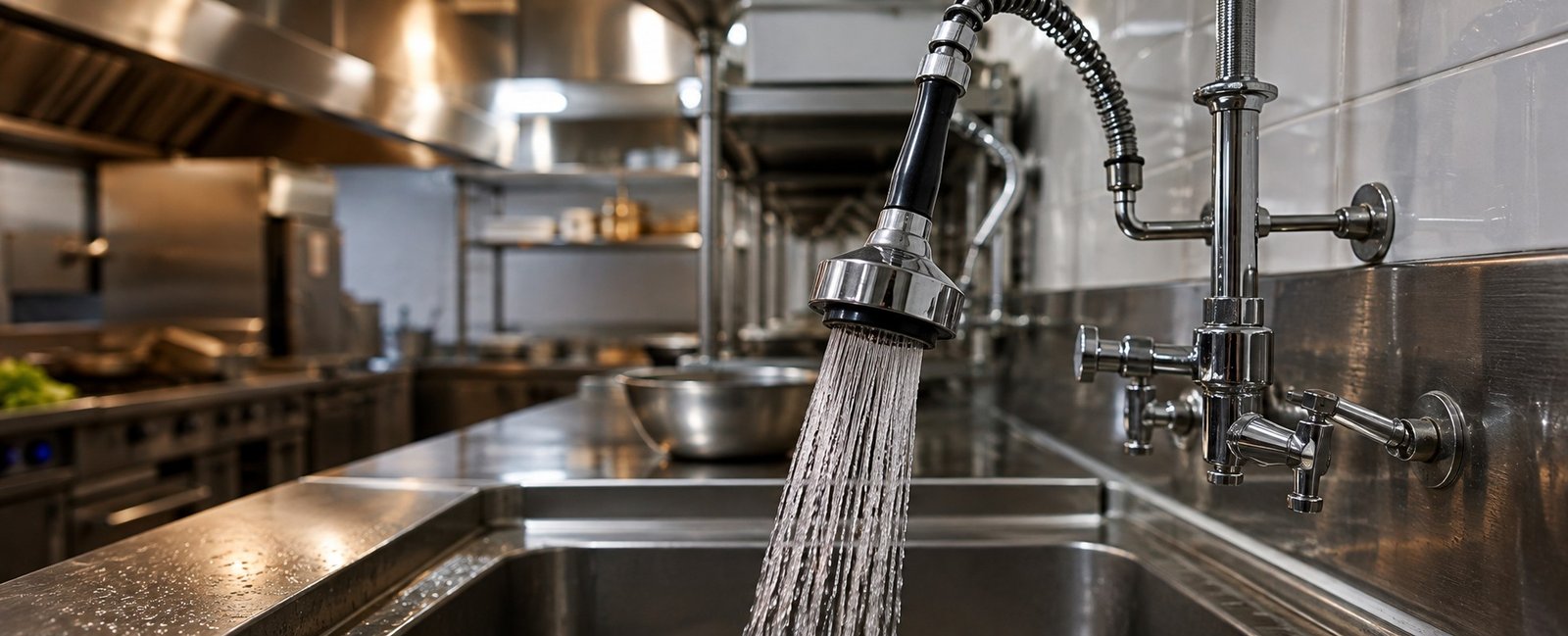
Commercial Kitchen Sprayer Faucets: What to Look For
Why it matters: The sprayer faucet, sometimes called a pre-rinse unit, is one of the hardest working fixtures in any commercial kitchen, used constantly for rinsing dishes, prepping ingredients, and general cleanup between and during services.
Key features to prioritize:
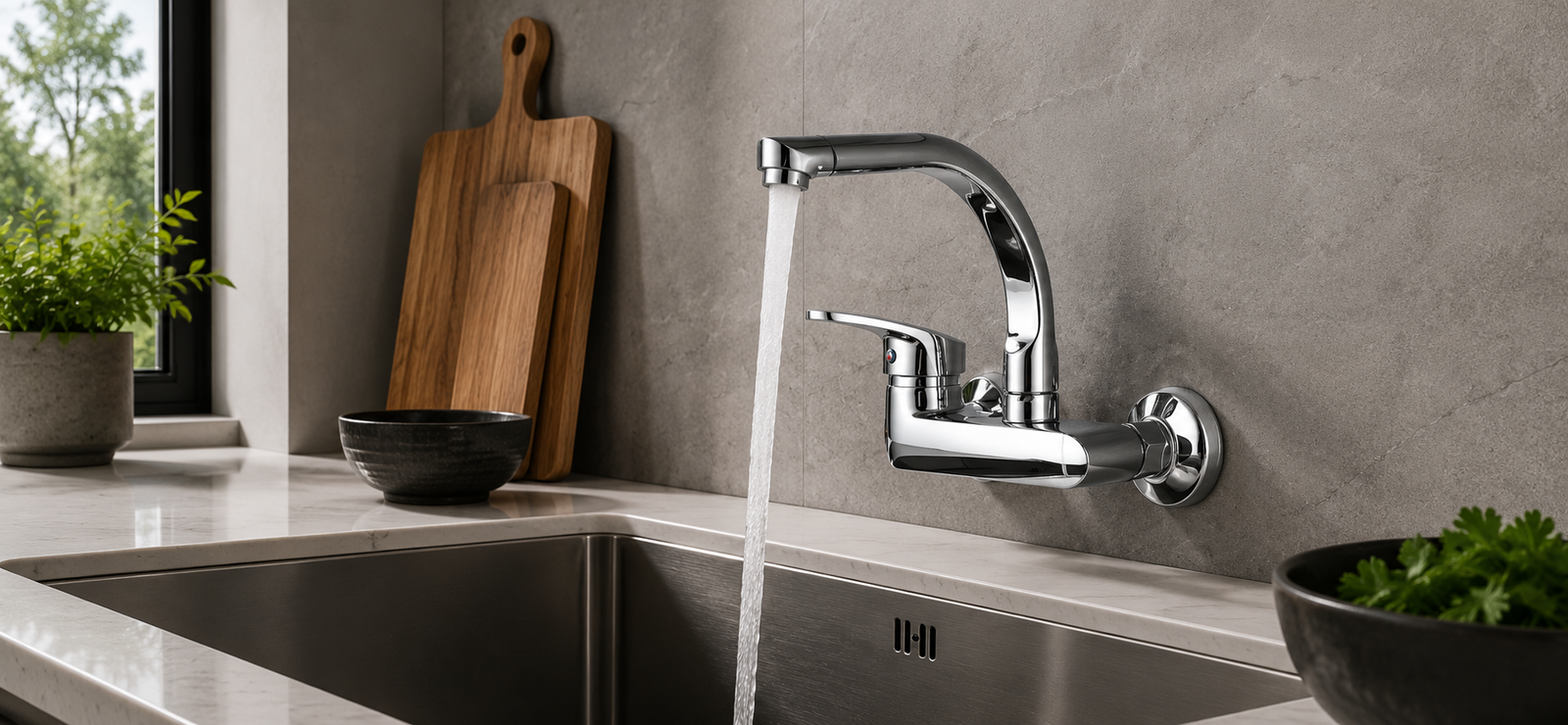
- Single lever operation. A single lever design allows faster, one-handed control, exactly what busy kitchen staff need during service. Kanzotech’s single lever kitchen mixer range is built around this kind of fast, reliable operation.
- Ceramic disc cartridges. These resist wear far better than older rubber washer mechanisms under the sheer volume of daily use a commercial kitchen puts a faucet through.
- Brass or stainless steel construction. Given constant exposure to hot water, cleaning chemicals, and Saudi Arabia’s hard water conditions, budget materials simply won’t last at commercial usage levels.
- A sprayer head built for pressure. A sprayer that struggles under sustained daily use becomes a bottleneck during busy service periods, not just an inconvenience.
Commercial Sink Hoses: Durability Matters More Than Anything Else
Why it matters: A commercial sink hose does more physical work than almost any other component in the kitchen, constantly extending, retracting, and flexing under repeated daily use. A hose built for occasional residential use simply won’t survive that pace.
What to look for in a commercial-grade hose:
- Reinforced, kink-resistant construction. A hose that kinks under pressure slows down kitchen staff and wears out faster at the kink point specifically.
- Heat resistance. Commercial kitchen hoses are regularly exposed to hot water well above typical residential use, and lower grade hose materials can degrade faster under that heat.
- Secure, leak-resistant connectors. With a hose extending and retracting constantly throughout a shift, connection points are where failures happen first if build quality is lacking.
Kanzotech’s flexible kitchen hose is built with this kind of repeated flex and daily commercial use in mind, offering the reinforced durability that a standard residential hose isn’t designed to handle.
Understanding Commercial Kitchen Hose Reels
Why it matters: In larger commercial kitchens, particularly those with multiple prep and wash stations, a hose reel system, a wall or ceiling mounted retractable reel holding the sink hose, helps manage hose length, prevents tripping hazards, and reduces wear from a hose being dragged across the floor or left tangled between uses.
What a hose reel setup typically involves:
- A mounted reel unit, either spring-retracting or manually wound, holding the flexible hose.
- A connection point linking the reel to the kitchen’s water supply and sprayer faucet.
- Adjustable length control, letting staff pull out only as much hose as a given task requires.
Practical tip: If you’re planning a new commercial kitchen layout or renovating an existing one, factor hose reel placement into your design early, since retrofitting one into a tight, already-built kitchen space is considerably more difficult than planning for it upfront alongside your faucet and hose selection.
Materials That Hold Up to Commercial Volume
Why it matters: The same hard water conditions covered in our guide on the best faucets for hard water in Saudi homes apply just as much, if not more, to commercial kitchens, where fixtures see far more water passing through them daily.
- Brass: A strong, reliable choice for commercial faucets, offering good resistance to both corrosion and the mechanical stress of frequent daily use.
- Stainless steel: Particularly well suited to commercial kitchens given its resistance to both hard water buildup and the frequent, sometimes harsh, cleaning products used in professional kitchen environments.
- Chrome plated lower grade metals: Common in budget commercial fixtures, but the plating tends to wear through noticeably faster under commercial-level daily use than in a residential setting.
Comparison Table: Residential vs Commercial Kitchen Fixtures

Step by Step: Sourcing Faucets and Hoses for a Commercial Kitchen
- Map out your kitchen’s station layout and identify how many sprayer faucets and hose connections you actually need.
- Prioritize single lever, ceramic disc cartridge faucets built in brass or stainless steel.
- Choose reinforced, kink-resistant hoses rated for repeated daily commercial use.
- Plan hose reel placement early if your kitchen layout supports one, rather than retrofitting later.
- Confirm bulk pricing and lead times if outfitting multiple stations or an entire hotel property.
- Establish a maintenance schedule accounting for your kitchen’s actual usage volume, not a standard residential timeline.
Common Mistakes When Sourcing Commercial Kitchen Fixtures
- Buying residential-grade faucets to save on upfront cost, only to face far more frequent replacements once real kitchen volume hits them.
- Underestimating hose durability needs, leading to kinked, leaking, or torn hoses within months of installation.
- Not planning hose reel placement during kitchen design, resulting in a cramped retrofit or staff simply leaving hoses tangled on the floor.
- Ignoring bulk sourcing opportunities. Outfitting an entire hotel or restaurant kitchen is exactly the kind of order where consolidating with a single reliable manufacturer improves both pricing and consistency across stations.
Frequently Asked Questions
- What’s the difference between a residential and commercial kitchen faucet? Commercial faucets are built to withstand far higher daily usage frequency, more demanding cleaning routines, and constant hot water exposure, typically requiring brass or stainless steel construction and commercial-rated cartridges to hold up.
- What should I look for in a commercial sink hose specifically? Prioritize reinforced, kink-resistant construction, heat resistance, and secure, leak-resistant connectors, since a commercial hose extends and retracts far more often than a residential one.
- Do I need a hose reel for my commercial kitchen? It depends on your kitchen’s layout and hose usage patterns. Larger kitchens with multiple stations often benefit from a hose reel to manage length, reduce tripping hazards, and prevent wear from a hose being dragged across the floor.
- How often should commercial kitchen faucets and hoses be replaced or serviced? Given the significantly higher usage volume compared to residential settings, commercial fixtures typically need more frequent inspection and maintenance, though quality brass or stainless steel construction extends the interval considerably compared to budget alternatives.
- Is a single lever faucet better than a dual handle for commercial kitchens? Yes, in most cases. Single lever operation allows faster, one-handed control, which matters during busy service periods when kitchen staff need quick, reliable access to water.
- Can I use the same faucets across my hotel’s kitchen, laundry, and housekeeping stations? It’s often practical to standardize on the same durable, commercial-grade material and cartridge type across stations, even if specific fixture styles vary by application, since it simplifies maintenance and bulk sourcing.
- What material lasts longest in a high-volume commercial kitchen? Stainless steel generally offers the strongest overall resistance to both hard water buildup and the frequent harsh cleaning common in professional kitchens, with brass a close, more budget-friendly alternative.
- Is it worth sourcing commercial kitchen fixtures in bulk from one supplier? Yes, particularly for hotels and larger restaurant operations. Consolidating under a single reliable manufacturer typically improves pricing, ensures consistency across stations, and simplifies future maintenance and replacement parts sourcing.
Conclusion
Commercial kitchens put a level of daily demand on faucets and hoses that residential-grade fixtures simply aren’t built to handle. Prioritizing single lever, ceramic disc cartridge faucets in brass or stainless steel, paired with reinforced, kink-resistant hoses, and planning hose reel placement early where needed, sets a kitchen up to run smoothly through years of daily high-volume service rather than facing repeated replacements within the first year.
Your next steps:
- Map your kitchen’s stations and actual hose and faucet requirements.
- Prioritize commercial-grade materials and cartridges over residential equivalents.
- Browse Kanzotech’s single lever kitchen mixers and flexible kitchen hoses, built for durability under daily commercial use.
Outfitting a restaurant, hotel, or institutional kitchen? Contact Kanzotech Faucets for bulk pricing and a fast RFQ turnaround.



 July 13, 2026
 HYZAM KENZ



Comments
No comments yet. Be the first to comment!