Introduction
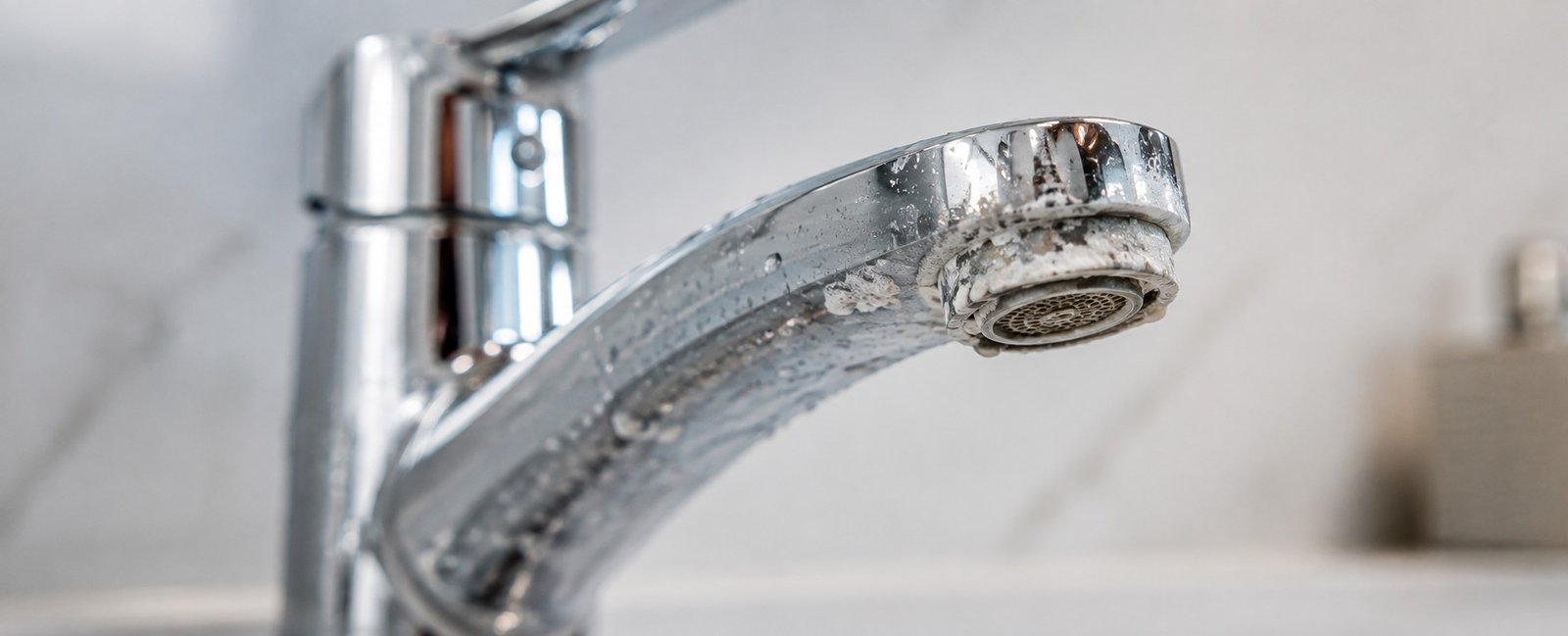
If you’ve ever replaced a faucet in Saudi Arabia only to see it clogging, staining, or losing pressure within a year or two, hard water is almost certainly the reason. Saudi Arabia’s municipal and desalinated water supply carries a high mineral content across most of the country, and standard faucets built without that in mind simply don’t last as long here as they might elsewhere.
This guide walks through exactly what to look for in a faucet built for hard water, which materials and finishes actually hold up, what a “hard water filter” tap actually refers to, and how to buy once instead of replacing the same faucet every couple of years.
Why Hard Water Is Such a Problem for Saudi Faucets
Why it matters: Hard water carries a high concentration of dissolved minerals, mainly calcium and magnesium. Every time water passes through a faucet, a small amount of that mineral content gets left behind. Over time, this buildup narrows internal passages, clogs aerators, and can even prevent a valve from sealing fully, all things that shorten a faucet’s working life well before it should actually wear out.
This is a genuinely Saudi-specific issue. Municipal and desalinated water sources across much of the Kingdom carry higher mineral content than many other regions, which is exactly why our earlier guide on brass vs. stainless steel faucets keeps coming back to hard water resistance as a deciding factor, and why it’s worth its own dedicated buying guide.
What Makes a Faucet Actually Good for Hard Water
Why it matters: Not every faucet marketed as “premium” is actually built with hard water in mind. A few specific features matter far more than general build quality alone.
Material: Brass or Stainless Steel
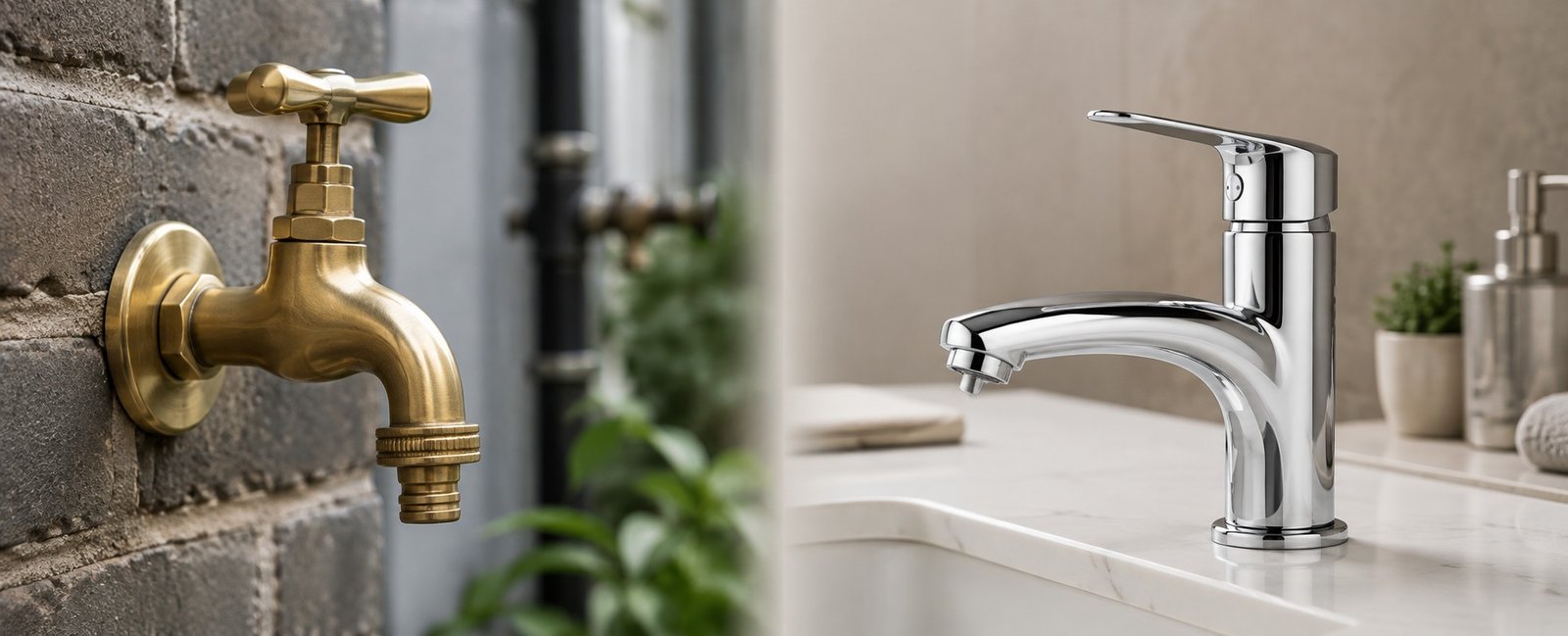
Brass and stainless steel resist mineral buildup and corrosion far better than lower grade metals or plastic internals. Between the two, brass offers a strong balance of cost and durability, while stainless steel edges ahead on long term corrosion resistance in particularly hard water areas. Our brass vs. stainless steel comparison covers the tradeoffs between the two in more depth if you’re deciding between them.
Anti-Lime or Self-Cleaning Nozzles
Faucets and shower heads with silicone or rubber nozzle openings let you simply rub away mineral deposits with a finger, rather than needing to disassemble and soak the whole fixture every time flow starts to weaken. This is one of the single most useful features for hard water areas specifically.
Ceramic Disc Cartridges
The internal cartridge controlling water flow matters as much as the exterior finish. Ceramic disc cartridges resist mineral scratching and buildup better than cheaper rubber washer mechanisms, which tend to degrade faster under hard water conditions.
Quality Chrome or PVD Finishes
A budget chrome finish can flake or dull within months under hard water exposure. A properly applied chrome or PVD (physical vapor deposition) finish holds its appearance and resists water spotting significantly longer.
Best Faucet Types for Hard Water Kitchens and Bathrooms
Why it matters: Beyond material and finish, certain faucet styles handle hard water conditions more gracefully than others, either through easier maintenance or more forgiving internal design.
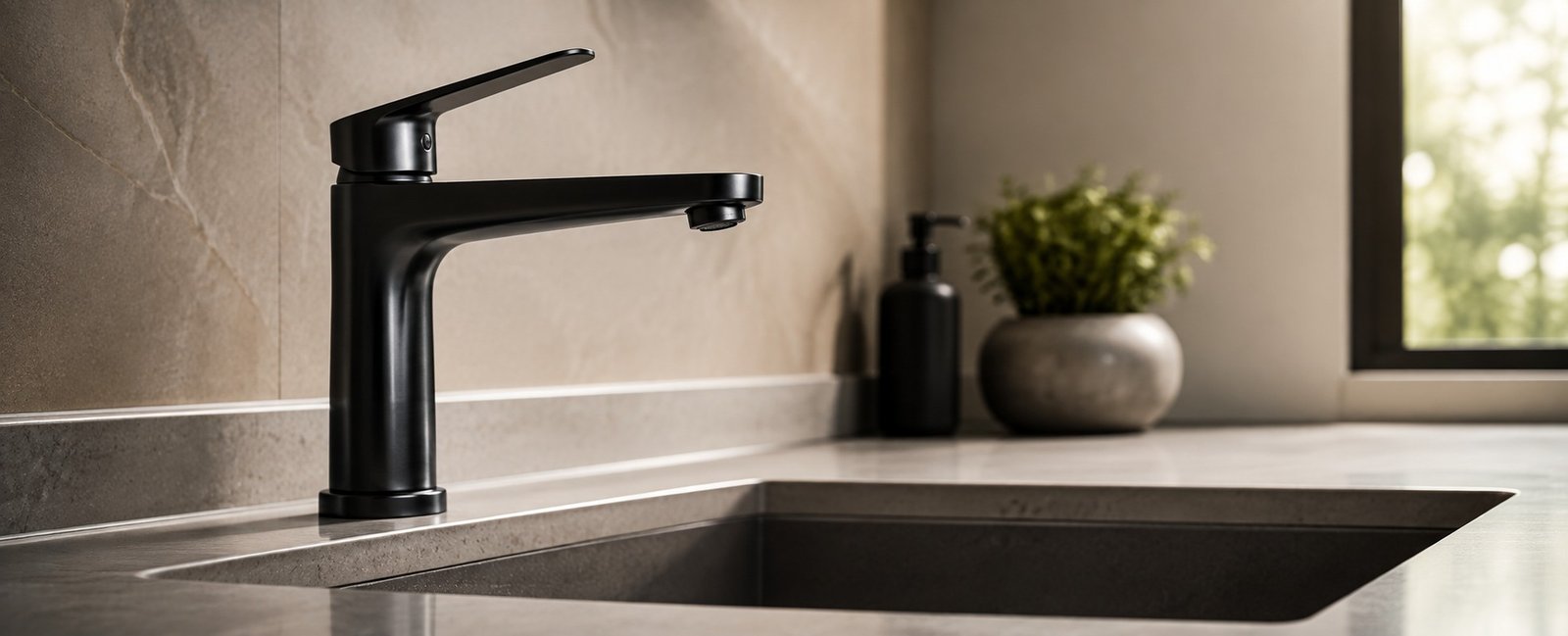
- Single lever kitchen and basin mixers. A single lever design typically means fewer moving parts exposed to mineral buildup compared to older dual-handle mechanisms, and Kanzotech’s single lever kitchen mixer and single lever basin mixer ranges are built with ceramic disc cartridges suited to this.
- Pull-out or pull-down kitchen faucets with anti-lime nozzles. The nozzle is the first point of contact for mineral buildup, so a design with an easy-clean silicone nozzle noticeably reduces maintenance frequency.
- Wall mounted faucets with accessible connections. Easier access to shut-off valves and connections simplifies periodic descaling and maintenance compared to fully concealed installations.
What Is a “Tap Hard Water Filter”?
Why it matters: This term shows up often in searches, and it’s worth a clear answer, since it refers to a different product category than the faucet itself.
A tap or faucet hard water filter is a separate inline filtration attachment, either built into the faucet spout or fitted as an add-on cartridge, designed to reduce mineral content or sediment in the water before it leaves the tap. This is distinct from the faucet’s own build quality and materials, which determine how well the fixture itself withstands hard water exposure over time, rather than filtering the water passing through it.
Practical tip: A quality faucet built with hard water resistant materials and a good anti-lime nozzle addresses the fixture’s own durability, while a separate inline filter addresses the water quality coming out of the tap. The two solve different problems, and many households benefit from combining a durable, well-built faucet with a separate filtration solution rather than expecting one to do the job of the other.
Comparison Table: Materials and Features for Hard Water

How to Choose the Right Faucet for Your Home
Step 1: Prioritize material over finish alone. A faucet can look premium in photos regardless of what’s underneath. Confirm brass or stainless steel construction before finish or styling.
Step 2: Check for anti-lime nozzle features specifically. This single feature has an outsized impact on how much maintenance the faucet needs over its lifetime.
Step 3: Decide if you also need a separate water filter. If your concern is water taste or mineral content in drinking water specifically, rather than just faucet durability, a separate inline filter addresses that need directly.
Step 4: Match your kitchen or bathroom’s existing fittings. For a consistent look and easier future maintenance, consider matching material and finish across your kitchen mixer, basin mixer, and any cold water taps in the same space.
Maintenance Tips to Extend Any Faucet’s Life Under Hard Water
- Clean the aerator or nozzle every 3 to 6 months, more often if flow noticeably weakens sooner.
- Soak removable nozzles and aerators in white vinegar for 30 to 60 minutes to dissolve mineral deposits.
- Wipe down faucet surfaces regularly to prevent water spots from setting into the finish.
- Consider a whole home water softener if hard water is a persistent issue across multiple fixtures, not just one faucet.
Frequently Asked Questions
- What’s the best faucet material for hard water areas in Saudi Arabia? Brass and stainless steel both resist mineral buildup and corrosion significantly better than lower grade metals or plastic internals, making them the top choices for hard water conditions.
- Do anti-lime nozzles actually make a difference? Yes. Silicone or rubber anti-lime nozzles let you clear mineral buildup by simply rubbing the openings with a finger, which meaningfully reduces how often a faucet needs deeper cleaning or replacement.
- What is a tap hard water filter, and do I need one? It’s a separate inline filtration attachment that reduces mineral content or sediment in the water itself, distinct from the faucet’s build quality. It’s worth considering if your concern is water taste or mineral content, alongside, not instead of, choosing a durable faucet.
- How often should I clean my faucet if I live in a hard water area? Cleaning the aerator or nozzle every 3 to 6 months is a reasonable baseline, though homes with particularly hard water may need to do this more frequently.
- Is a single lever faucet better for hard water than a dual handle one? Single lever designs generally have fewer moving parts exposed to mineral buildup, and often pair with ceramic disc cartridges that resist wear better than older dual-handle mechanisms.
- Can a good faucet alone fix hard water problems in my home? A durable, well-built faucet resists the effects of hard water better and lasts longer, but it doesn’t change the mineral content of the water itself. For that, a separate filtration or water softening solution is needed.
- Why do budget faucets fail so quickly in Saudi Arabia specifically? Budget faucets often use plastic internals or basic rubber washers that degrade faster under the high mineral content common in Saudi Arabia’s municipal and desalinated water supply, compared to brass or stainless steel construction.
- Does a whole home water softener replace the need for a hard water resistant faucet? Not entirely. A softener reduces mineral content across your whole home’s water supply, but a durable, well-built faucet still holds up better over time regardless, especially in homes without a softener installed.
Conclusion
The best faucet for hard water conditions in a Saudi home comes down to a few specific, checkable factors: brass or stainless steel construction, an anti-lime nozzle, a ceramic disc cartridge, and a quality finish that resists spotting over time. A faucet built around these features will consistently outlast a budget option, regardless of how similar they might look on a store shelf. If your concern extends beyond the faucet itself to water taste or mineral content, pairing a durable faucet with a separate filtration solution covers both sides of the problem.
Your next steps:
- Check your current faucets for signs of mineral buildup or reduced flow.
- Prioritize brass or stainless steel with an anti-lime nozzle for any replacement.
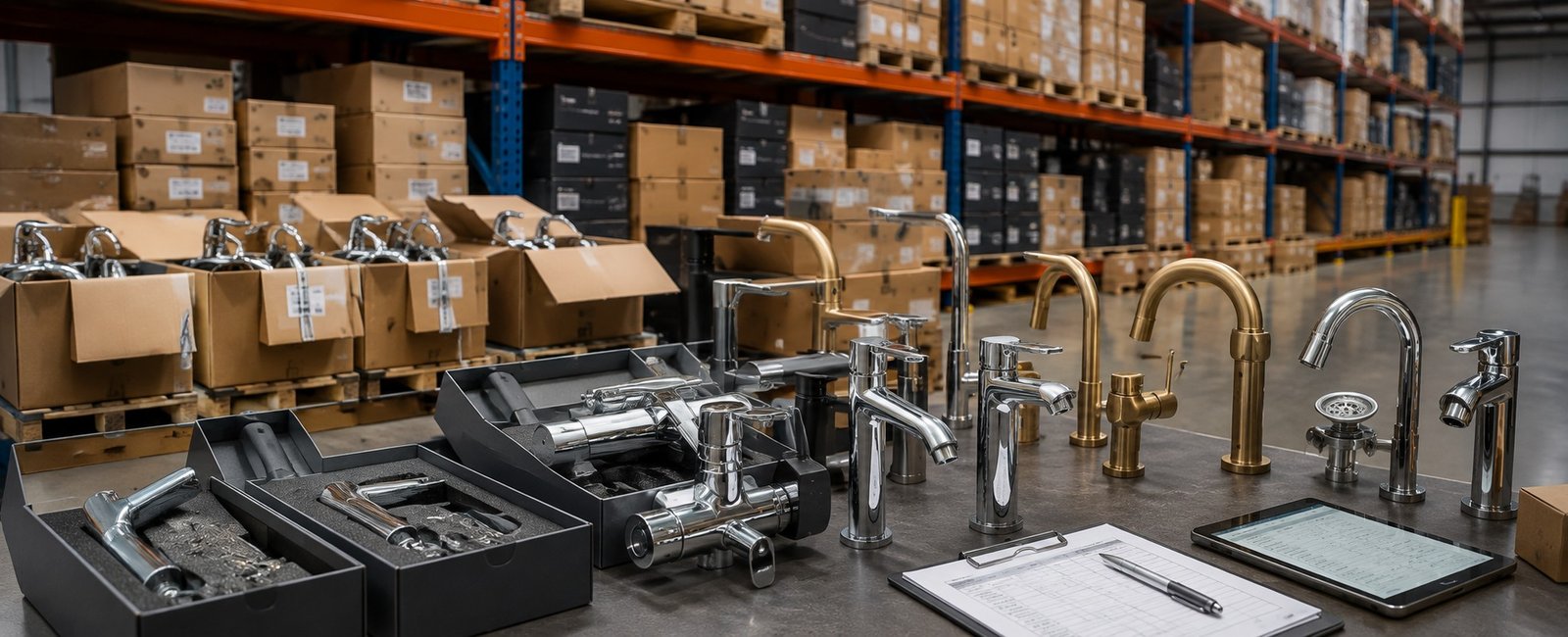
- Browse Kanzotech’s single lever kitchen mixers and cold water taps, built with Saudi water conditions in mind.
Sourcing hard water resistant faucets for your home or a project? Contact Kanzotech Faucets for guidance on the right fittings.



 August 20, 2026
 HYZAM KENZ



Comments
No comments yet. Be the first to comment!