There’s a fixture in your bathroom you use more than almost anything else and most people never think about it until it starts dripping, sticking, or looking dated.
Bathroom mixer taps seem simple on the surface. Turn the handle, water comes out. But the difference between a well-chosen mixer tap and a poor one shows up every single day, in how quickly you find the right temperature, how much water runs down the drain while you’re adjusting, how the fixture looks after two years of hard use, and whether your plumber is getting called back for repairs.
If you’re renovating a bathroom, fitting out a new home, or just replacing an aging tap that’s seen better days, this guide covers everything you need to make a genuinely informed decision not just pick whatever looks good in a catalogue photo.
What Are Bathroom Mixer Taps?
A bathroom mixer tap combines hot and cold water supply lines into a single spout, letting you control temperature and flow rate from one mechanism rather than juggling two separate taps.
That sounds basic, but it’s a meaningful improvement over traditional dual-tap systems. With a standard hot/cold setup, you’re always mixing streams reactively running both taps and testing the water until it’s right. With a mixer tap, the blending happens inside the body of the faucet before the water exits, so you get immediate, consistent temperature from the moment you turn it on.
Mixer taps work with virtually every basin type found in modern bathrooms:
- Countertop and semi-recessed basins
- Vessel basins (above-counter bowls)
- Vanity unit basins
- Wall-hung and pedestal basins
- Compact cloakroom sinks
Their versatility, combined with the sheer range of styles and finishes available, is why mixer taps have become the default choice in contemporary bathroom design. If you’re also evaluating other wash basin faucets for your project, our dedicated guide covers sizing, types, and finish selection in full detail.
How Bathroom Mixer Taps Work
Inside every quality mixer tap is a cartridge , the internal valve that controls the blend of hot and cold water and regulates flow rate. The cartridge is arguably the most important component in the entire tap. Here’s why:
Ceramic disc cartridges are the benchmark for modern mixer taps. Two ceramic discs rotate against each other to open, close, and blend the water supply. They’re smooth to operate, highly resistant to dripping, and built to last well over a decade of daily use. Any quality mixer tap worth considering will have a ceramic disc cartridge.
Rubber washer mechanisms are the older technology , still found in budget taps and some pillar designs. They wear out, start dripping, and need periodic replacement. If a supplier can’t confirm ceramic cartridge construction, that’s a red flag.
When you move the handle on a single lever mixer tap, you’re rotating and tilting the ceramic disc simultaneously — one axis controls temperature, the other controls flow. It’s a simple, elegant mechanism that’s been refined to near-perfection by quality manufacturers. Every bathroom mixer tap in the Kanzotech Faucets collection is built with ceramic disc technology as standard — it’s the baseline we don’t compromise on.
Benefits of Bathroom Mixer Taps
Convenience
One control for temperature and flow. No more running two taps simultaneously and testing with your hand. You find your preferred temperature, remember roughly where the handle sits, and return to it every time. For families with young children, this also makes it much easier to set a safe, consistent water temperature.
Modern Aesthetic
Mixer taps suit the clean, minimal look that dominates contemporary bathroom design. A single-body faucet with one handle simply looks more resolved than two separate taps on a basin.
Water Efficiency
Quality mixer taps integrate aerators and flow restrictors that maintain strong, comfortable pressure at meaningfully lower flow rates. In Saudi Arabia — where water conservation is both a practical and regulatory consideration — this matters. You’re also wasting less water in the temperature-finding phase, which adds up across dozens of uses per day in a family home.
Temperature Accuracy
The ceramic cartridge gives you precise, repeatable control. If you like your water at a certain temperature for face washing in the morning, a quality mixer tap delivers that consistently every time.
Types of Bathroom Mixer Taps
Single Lever Mixer Taps
The single lever is the most widely used mixer tap style in modern bathrooms, and for good reason. One handle does everything, lift or push for flow, rotate left or right for temperature. The operation is intuitive within seconds and stays comfortable for users of all ages.
Visually, single lever taps suit minimalist, contemporary, and Scandinavian bathroom styles particularly well. They’re compact, clean-looking, and available across a wide range of finishes.
Best for: Most modern bathrooms, family homes, minimalist and contemporary interiors.
Dual Handle Mixer Taps
Dual handle mixer taps have separate controls for hot and cold water, but they still combine the flow through a single spout — so you get the blended output of a mixer with the visual language of a traditional two-tap setup.
They tend to suit transitional bathrooms, spaces that blend modern structure with warmer, more classic detailing. Brushed nickel or antique brass dual handle taps can add significant character to a bathroom that single lever designs can’t always achieve.
Best for: Transitional interiors, classic-modern blends, three-hole basin configurations.
Wall-Mounted Mixer Taps
Wall-mounted mixer taps extend from the wall rather than the basin deck, leaving the countertop entirely clear. The result looks markedly more expensive than deck-mounted alternatives and it genuinely is easier to clean, since there’s no tap base collecting water and limescale on the counter surface.
The constraint is installation. Wall-mounted taps require the hot and cold supply lines to emerge from the wall at precisely the right height and spacing, ideally planned during construction or a full renovation. Retrofitting them into an existing bathroom that wasn’t designed for them can involve significant wall work and plumbing costs. If you’re starting fresh, they’re worth serious consideration.
Best for: Full renovations, luxury bathrooms, vessel and countertop basins where countertop clarity matters.
Deck-Mounted Mixer Taps
Deck-mounted taps install directly into the basin or countertop. They’re the most common installation style for good reason: they’re straightforward to fit, widely compatible, and available in the broadest range of designs.
For most residential bathroom projects , new builds, renovations, and replacements , a quality deck-mounted mixer tap is the practical default, and there’s no shortage of excellent options across every price point.
Best for: Most residential bathrooms, standard single-hole and three-hole basin configurations, replacement installations.
Choosing the Right Bathroom Mixer Tap
Match the Style to Your Bathroom
Your mixer tap doesn’t need to be the hero of the room — but it does need to belong in it. A matte black tap in an otherwise all-white minimalist bathroom creates sharp, intentional contrast. The same tap in a warm, wood-accented bathroom can feel jarring.

Get the Basin Relationship Right
The faucet and basin are a pair. Size them incorrectly and one of two things happens: the water hits the rim or back wall and splashes everywhere, or the spout is so low it’s awkward to use. Neither is acceptable in a well-planned bathroom.
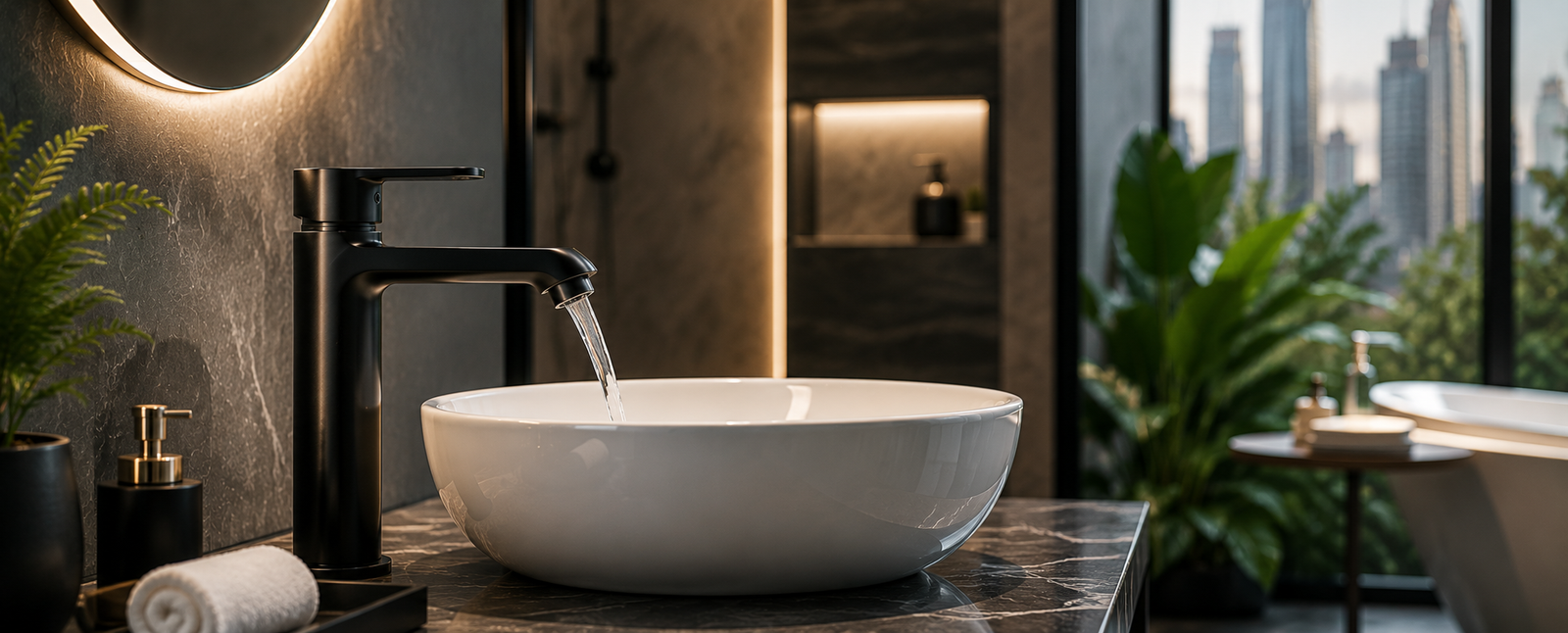
- Vessel basins sit above the counter and add height ,use a high-rise mixer tap (180–200mm+ spout height) so the water arcs into the centre of the bowl
- Standard countertop or semi-recessed basins suit medium-height mixer taps
- Compact and cloakroom basins need a shorter spout reach to avoid overshooting the basin
- Wall-hung basins pair naturally with wall-mounted taps
Also confirm the hole configuration of your basin before purchasing: single-hole (most single lever taps), three-hole (dual handle or widespread), or wall-prepared.
Check Water Pressure Compatibility
Not all mixer taps perform well across all water pressure ranges. Some are optimised for high-pressure systems; others are designed to function effectively under low or variable pressure, which is more common in certain building types and locations across Saudi Arabia.
Check the minimum operating pressure specified by the manufacturer and compare it against your actual supply. A tap that underperforms due to pressure mismatch is frustrating regardless of how good it looks.
Faucet Finishes – Appearance and Practicality Together
Chrome
The most widely used finish globally. Highly reflective, affordable, and easy to match with other bathroom accessories. The trade-off: it shows water spots and fingerprints more readily than brushed finishes, requiring more frequent wiping.
Matte Black
The dominant trend in modern bathroom design right now, and it’s earned its position. Matte black hides fingerprints and water marks exceptionally well, creates strong visual contrast against white basins, and gives any bathroom an immediate sense of contemporary edge. Easier to maintain than chrome in daily use.
Brushed Nickel
Warmer and softer than chrome, without the maintenance burden. Brushed nickel hides water spots well, pairs beautifully with timber vanity units and warm tile palettes, and suits Scandinavian and soft-modern interiors particularly well.
Gunmetal Grey
Growing fast in premium residential and hospitality fit-outs. Gunmetal has a sophisticated, understated quality that polished and matte finishes can’t quite replicate. Works exceptionally well with neutral and stone-based palettes.
Brushed Gold / Antique Brass
Having a strong design moment, particularly in luxury bathrooms. High visual impact when executed well but requires commitment: your towel rails, accessories, and flush plates should all follow the same finish family for it to read as intentional rather than mixed.
Why Brass Mixer Taps Are the Right Default
When it comes to the tap body material, solid brass is the benchmark. It’s been the standard for quality plumbing fixtures for decades: excellent corrosion resistance, handles hard water conditions well, machines precisely, and supports high-quality surface finishes.
In Saudi Arabia specifically, where water hardness varies by region and mineral deposits can accelerate corrosion in lower-quality materials, brass construction isn’t a luxury , it’s the sensible baseline for any tap you expect to last.
Kanzotech Faucets manufactures its brass bathroom mixer taps with full solid brass bodies as standard across the range. It’s not an optional upgrade or a premium tier , it’s the construction baseline, because anything less creates problems in the Kingdom’s conditions that show up within years, not decades.
Zinc alloy alternatives are common at the budget end of the market. They cost less upfront but are meaningfully more susceptible to corrosion, surface degradation, and failure. In most cases, the long-term cost of replacing a zinc alloy tap earlier , plus installation , exceeds the upfront saving.
Water Efficiency and Sustainability
A quality modern mixer tap should deliver strong, comfortable water pressure at flow rates that are meaningfully lower than older faucet designs. The mechanism that makes this possible is the aerator , a small mesh insert at the spout tip that introduces air into the water stream, maintaining the sensation of full pressure while physically reducing the volume of water used.
Many premium mixer taps also include flow restrictors and precision ceramic cartridges that contribute to lower consumption across the tap’s operational life.
For households and developments in Saudi Arabia, where water is a genuine resource challenge, these specifications are worth checking actively. If you’re specifying for a larger project , a residential compound, hotel, or government facility , contact the Kanzotech Faucets team for project-level consultation on water-efficient specification across multiple units.
Installation – What to Confirm Before You Buy
Getting the installation details wrong is the most avoidable and most common mistake in tap purchasing. Check these before you order:
- Basin hole configuration: Single-hole (most common for single lever taps), three-hole (for dual handle or widespread styles), or wall-prepared (for wall-mounted options). Your basin determines your options , not the other way around.
- Spout height and reach: The water should arc into the centre of the basin, not the back wall. For vessel basins, confirm minimum spout height requirements.
- Connection sizes: Standard in Saudi Arabia is typically ½ inch BSP. Confirm your plumbing connection size matches the tap’s supply fittings before installation day.
- Water pressure: Confirm the tap’s minimum operating pressure against your building’s supply, especially in multi-storey residential buildings where upper floors may experience lower pressure.
If you’re unsure about any of these, the team at Kanzotech Faucets can advise across any of the 16 branches across the Kingdom , walk in with your basin dimensions and they’ll confirm compatibility on the spot.
Maintenance and Cleaning
A quality mixer tap with a ceramic cartridge and PVD or electroplated finish should require very little maintenance beyond regular wiping. A few practices that extend both appearance and lifespan:
- Wipe down after use with a soft, damp cloth , particularly in hard water areas where mineral deposits build up quickly
- Remove limescale with a diluted vinegar solution; never use abrasive pads or harsh chemical cleaners on any finished surface
- Inspect and clean the aerator every 6–12 months , mineral buildup in the aerator is the most common cause of reduced flow pressure and is easily fixed
- If the tap develops any stiffness or dripping, the ceramic cartridge can usually be replaced without changing the whole tap body , a straightforward job for any plumber
Common Mistakes to Avoid
Buying based solely on the photograph
The photo shows you the finish and form, not the cartridge quality, brass construction, or how the handle actually feels. Always confirm ceramic cartridge and brass body in the product specification before ordering.
Ignoring the hole configuration
A three-hole basin with a single-hole tap requires drilling. A single-hole basin with a three-hole tap requires a deck plate cover. Neither situation is ideal. Measure and confirm before ordering.
Getting the height wrong for a vessel basin
A standard-height tap on a tall vessel basin sends water into the rim. The water hits, everything splashes. Measure the internal basin height above counter level and choose a high-rise tap accordingly.
Not coordinating finishes
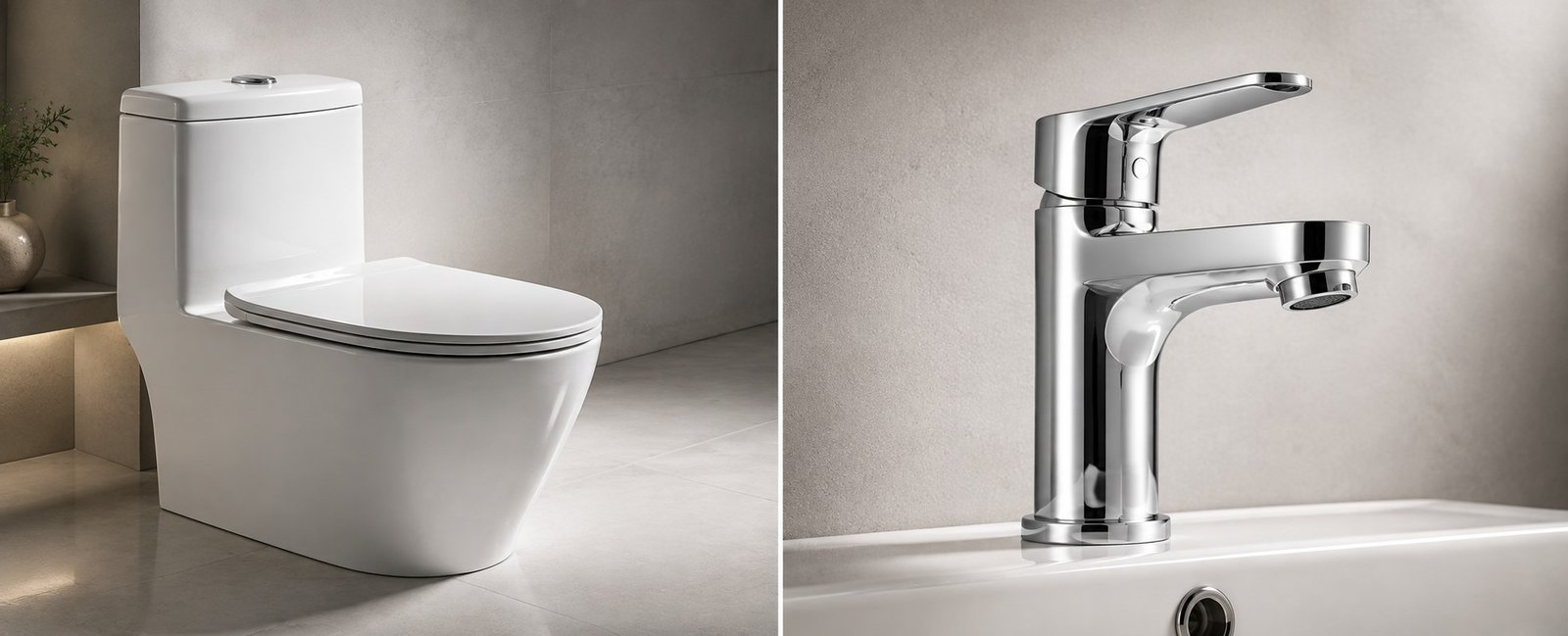
Your mixer tap finish and your towel rail, toilet flush plate, mirror frame, and bathroom accessory set should be from the same finish family. Mixed finishes are rarely intentional-looking in a residential bathroom.
Overlooking after-sales support
Cartridges need occasional replacement. Aerators get scaled. Choose a supplier with genuine Saudi Arabia market presence and local spare parts access , not just a brand with a good-looking website and no Kingdom support infrastructure.
Why Quality Matters Over Initial Price
A bathroom mixer tap is a 10–15 year investment in the best case. The economics are straightforward: one quality brass tap with a ceramic cartridge, bought once and maintained, consistently outperforms two or three budget replacements over the same period when you factor in replacement product cost plus plumber visits.
Beyond the cost calculation, there’s the daily experience. A quality ceramic cartridge is smooth and precise from day one and stays that way for years. A rubber washer mechanism stiffens, starts requiring more force, and eventually starts dripping , usually at the point least convenient to deal with.
For any serious bathroom project , villa, apartment, hotel, development , quality tap specification is one of the decisions where the long-term return on investment is clearest.
Final Thoughts
Choosing bathroom mixer taps comes down to a handful of genuinely important decisions: which style suits your basin and bathroom design, which material and finish match your maintenance expectations and aesthetic, and whether the spec , cartridge type, pressure rating, connection size , is confirmed and compatible before installation day.
Get those things right, choose solid brass with a ceramic cartridge, coordinate your finishes across the bathroom, and prioritise water efficiency in the specification. That combination will serve you well for the full life of the bathroom.
Ready to Specify the Right Tap?
Kanzotech Faucets supplies a complete range of modern bathroom mixer taps across chrome, matte black, brushed nickel, and gunmetal finishes , all engineered for Saudi Arabia’s conditions and backed by 25+ years of Kingdom-wide experience across 16 branches. Browse the full collection or send your project details via WhatsApp for a fast, tailored response.
Browse the Collection
Frequently Asked Questions
1.What are bathroom mixer taps?
Bathroom mixer taps blend hot and cold water inside the faucet body before it exits through the spout, letting you control temperature and flow with a single handle. They replace the traditional two-tap system with a more convenient and efficient single mechanism.
2.Are mixer taps better than separate hot and cold taps?
For most modern bathrooms, yes. Mixer taps offer faster temperature control, less water waste during adjustment, a cleaner visual appearance, and better compatibility with modern basin designs. Separate taps remain relevant in specific traditional or heritage bathroom contexts.
3.Which finish is easiest to maintain?
Matte black and brushed nickel both conceal water spots and fingerprints well and require less frequent cleaning than polished chrome. PVD-coated finishes in any colour offer the best long-term resistance to tarnishing and corrosion.
4.What material is best for bathroom mixer taps?
Solid brass is the best choice for longevity and corrosion resistance, particularly in Saudi Arabia’s hard water conditions. Avoid zinc alloy for anything other than very light-use applications.
5.Do bathroom mixer taps need to comply with SASO standards in Saudi Arabia?
Yes. Plumbing fixtures for new builds and renovated bathrooms in the Kingdom should meet SASO requirements. Confirm compliance with your supplier before specifying or installing.



 August 13, 2026
 HYZAM KENZ



Comments
No comments yet. Be the first to comment!