Introduction
Specifying fittings for a new build or renovation eventually comes down to a decision that sounds simple but trips up a lot of buyers: bib tap or mixer tap? The two look similar enough in passing that it’s easy to assume they’re interchangeable, but they serve genuinely different purposes, and choosing the wrong one for a given space usually means a return trip to the supplier once installation reveals the problem.
This guide breaks down exactly what separates a bib tap from a mixer tap, where each one actually belongs in a project, and how to decide between them without guessing.
The Short Answer
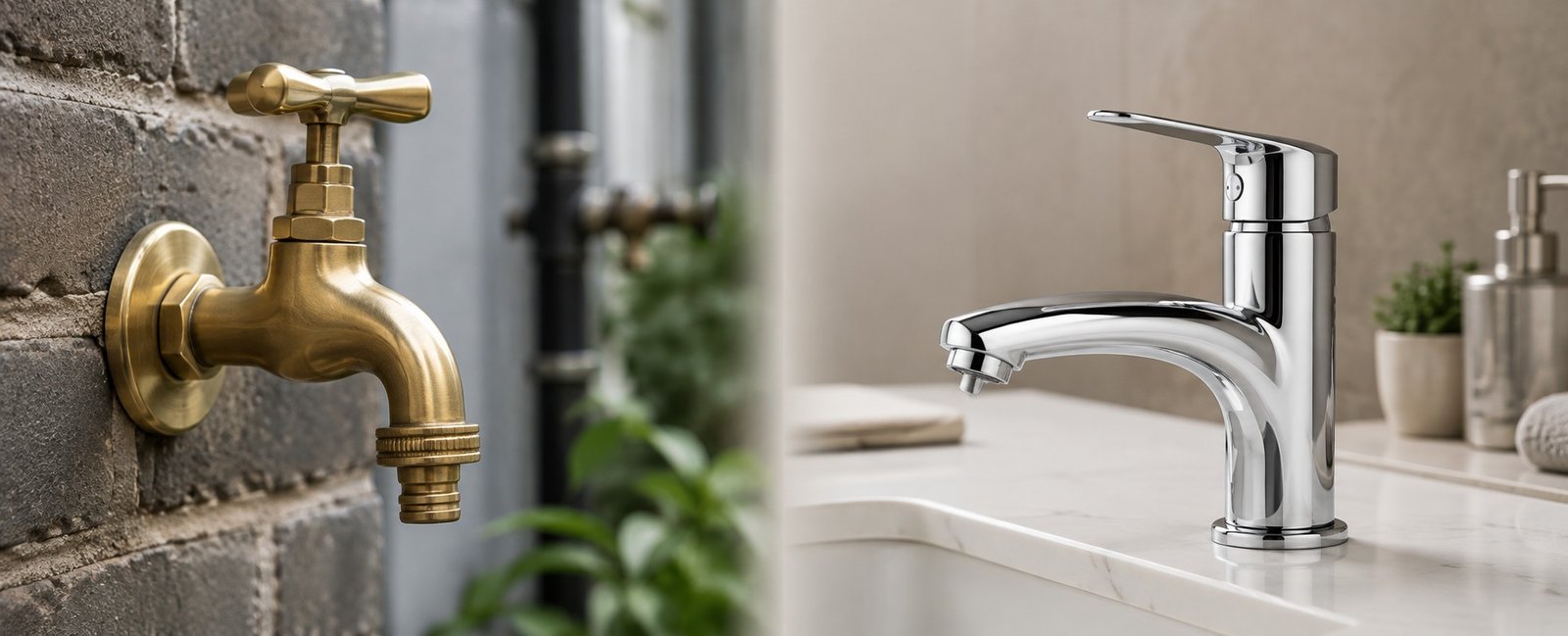
A bib tap supplies water from a single line, either hot or cold, with no internal mixing. A mixer tap combines both hot and cold supply lines into one fitting, letting you control temperature and flow through a single spout or lever.
Why it matters: The core difference isn’t styling, it’s plumbing. A bib tap connects to one water line. A mixer tap connects to two, and blends them internally before the water reaches the outlet.
What Is a Bib Tap?
Why it matters: A bib tap, sometimes called a bib cock, is one of the simplest fittings in any plumbing system, a single valve controlling flow from a single water line, with no temperature mixing involved.
Common uses for a bib tap:
- Outdoor connections, garden taps, and hose bibs
- Utility areas, laundry rooms, and service yards
- Cold water only points, like a dedicated drinking or washing tap
- Applications where only one water line, hot or cold, is actually needed
Practical example: The tap you connect a garden hose to outside a villa is a bib tap. It doesn’t need to mix temperatures, it just needs to control flow from a single supply line reliably.
What Is a Mixer Tap?
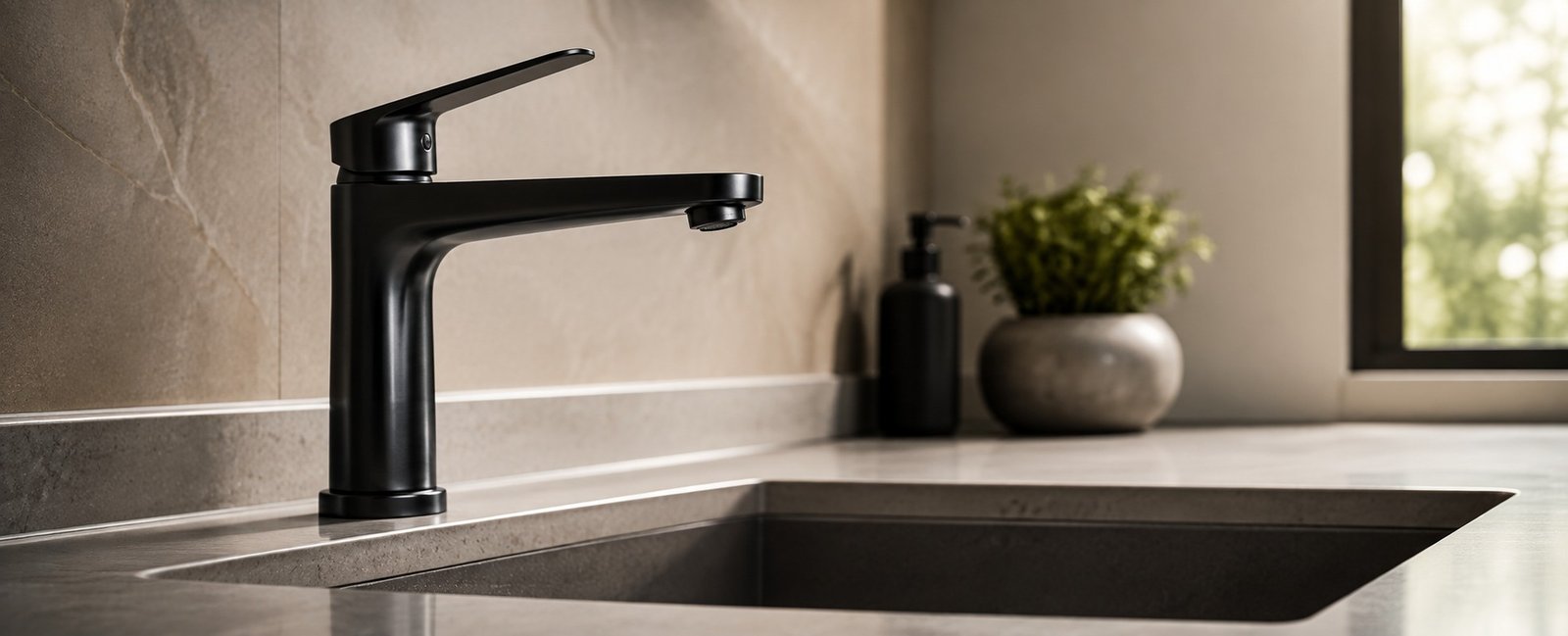
Why it matters: A mixer tap combines hot and cold water supply lines into a single fitting, using either a single lever or dual handles to control both temperature and flow together.
Common uses for a mixer tap:
- Kitchen sinks, where temperature control matters for washing and food prep
- Bathroom basins, where a comfortable, adjustable temperature is expected
- Showers and bath fillers, where blending hot and cold is the entire point of the fixture
- Any application where a single, adjustable water temperature is needed at the point of use
Practical example: The faucet at a kitchen sink, where you turn a single lever to adjust both flow and temperature, is a mixer tap. Kanzotech’s single lever and double handle ranges both fall into this category, differing in how the mixing is controlled rather than whether mixing happens at all.
Bib Tap vs. Mixer Tap: Side-by-Side Comparison

How to Decide Which One Your Project Needs
Why it matters: The decision usually comes down to one question: does this specific point actually need adjustable temperature, or is a single, consistent water supply enough?
Choose a bib tap when:
- The application is outdoors or in a utility space with no need for temperature blending.
- Only one water line, typically cold, is available or required at that point.
- Simplicity and lower installation cost matter more than adjustable comfort.
Choose a mixer tap when:
- The fixture is used for washing, bathing, or food preparation, where a comfortable, adjustable temperature genuinely matters.
- Both hot and cold supply lines are already available at that connection point.
- The space is a kitchen, bathroom, or anywhere daily comfort and usability are a priority.
Common mistake: Installing a bib tap in a location where users will expect temperature control, like a bathroom basin, simply because it was cheaper or already on hand. This almost always leads to a costly replacement once the limitation becomes obvious in daily use.
Best practice: Map out every water point in a project by actual function, not just location, before finalizing your fitting list. A utility room sink used only for filling buckets may only need a bib tap, while a utility room with a wash basin for staff likely needs a mixer.
Can You Use Both in the Same Project?
Why it matters: Most real projects use a mix of both, and that’s entirely normal. A well-specified villa or commercial building typically includes bib taps for outdoor and utility points, alongside mixer taps throughout kitchens and bathrooms.
Practical tip: When building your fittings list for a new construction or renovation project, go space by space, garden and utility areas typically call for bib taps, while kitchens, bathrooms, and any guest-facing wash area call for mixer taps.
Frequently Asked Questions
- Is a bib tap cheaper than a mixer tap? Generally yes, since a bib tap has a simpler internal mechanism and only connects to a single water line, compared to a mixer tap’s dual-line connection and internal blending mechanism.
- Can a bib tap be converted into a mixer tap? Not directly. A mixer tap requires two separate supply lines, hot and cold, feeding into it, so converting a single-line bib tap installation into a mixer setup usually requires additional plumbing work, not just a fitting swap.
- Do bathrooms always need a mixer tap? In almost all cases, yes, since adjustable temperature is a standard expectation for a basin, shower, or bath. A bib tap is rarely appropriate for a primary bathroom fixture.
- Is a bib tap the same as an outdoor hose tap? An outdoor hose tap, or hose bib, is a specific application of a bib tap, but bib taps are also used indoors wherever only a single water line is needed, such as certain utility or laundry connections.
- What’s the difference between a single lever mixer and a double handle mixer? Both are types of mixer taps that blend hot and cold water, differing in their control mechanism, a single lever adjusts both temperature and flow together, while a double handle uses separate controls for hot and cold. Our single lever vs. double handle comparison covers this distinction in more depth.
- Why would a kitchen ever use a bib tap instead of a mixer? This is uncommon for a primary kitchen sink, but a secondary cold-water-only point, like a dedicated drinking water tap, might reasonably use a bib tap rather than a full mixer.
- Does a mixer tap cost more to install than a bib tap? Typically yes, since it requires connecting both hot and cold supply lines rather than a single connection, meaning slightly more plumbing work at installation.
Conclusion
The choice between a bib tap and a mixer tap comes down to a straightforward question: does this specific point need adjustable temperature, or just a reliable single water supply? Bib taps suit outdoor points, utility areas, and single-line applications, while mixer taps belong wherever comfort and temperature control matter, kitchens, bathrooms, and showers. Most projects need both, mapped out space by space rather than applied as a single blanket choice.
Your next steps:
- List every water point in your project by function, not just location.
- Assign bib taps to single-supply, utility, and outdoor points.
- Assign mixer taps to kitchens, bathrooms, and any comfort-focused fixture.
- Browse Kanzotech’s cold water taps alongside our single lever and double handle mixer ranges to cover both needs.
Specifying fittings for a new construction or renovation project? Contact Kanzotech Faucets for guidance on the right mix of taps for your space.



 August 20, 2026
 HYZAM KENZ



Comments
No comments yet. Be the first to comment!