Introduction
If you’ve ever seen a small handheld spray fitted next to a toilet and wondered what it’s actually called or what it’s for, you’re not alone. “Health faucet” is one of those terms that shows up constantly in bathroom fittings stores and online listings, yet very few people can explain exactly what it means, how it’s different from a bidet, or whether it’s even the right fixture for their bathroom.
This confusion is common enough that “health faucet meaning” is searched almost as often as the product itself. So before jumping into buying advice, this guide starts with a clear, simple answer to that exact question, then walks through everything you need to know to choose the right one for your home.
By the end, you’ll understand exactly what a health faucet is, how it compares to alternatives like bidets and jet sprays, what to look for when buying one, and how to install and maintain it properly.
Summary
- A health faucet is a handheld spray unit installed next to a toilet, used for personal hygiene after using the bathroom.
- It’s also known as a bidet spray, hand spray, or jet spray in different regions, though small design differences exist between these terms.
- Health faucets connect to your existing water supply line and don’t require electricity, unlike electronic bidets.
- The main types are stainless steel, ABS plastic, and brass, each with a different balance of cost and durability.
- A health faucet is generally more water efficient than using a mug or bucket for the same purpose.
- Installation is usually simple and can often be done without professional help if you have basic plumbing tools.
- Look for anti-clog nozzles, a comfortable trigger, and a proper hose length for easier use.
- Prices vary widely by material and brand, so it’s worth comparing a few options rather than buying the first one you see.
What Is a Health Faucet? (Clear Definition)
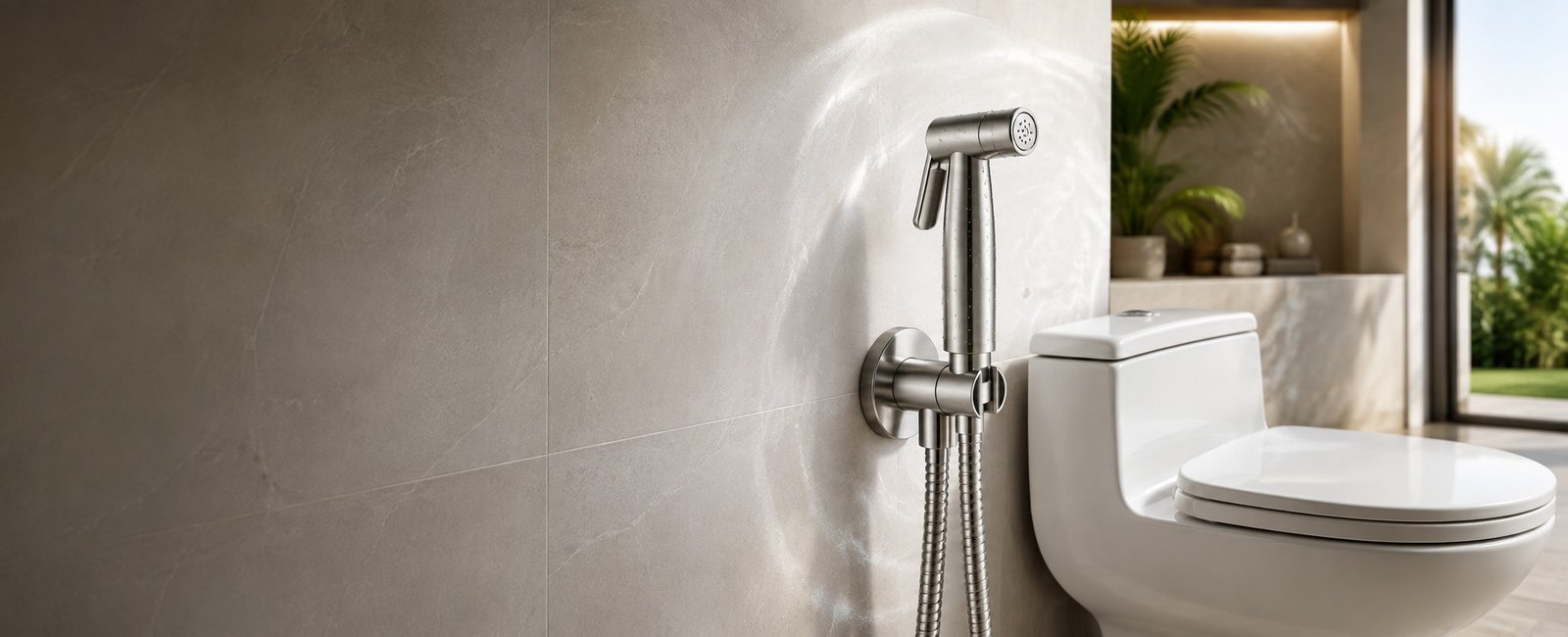
A health faucet is a small, handheld spray nozzle connected by a flexible hose to your bathroom’s water supply, typically mounted on a wall bracket next to the toilet. You hold it, aim it, and squeeze a trigger to release a stream of water, used for personal hygiene after using the toilet.
Why it matters: Despite how common the fixture is, the name itself causes confusion because it doesn’t obviously describe what it does. Unlike “shower head” or “kitchen tap,” the term “health faucet” doesn’t tell a first time buyer anything about its function, which is exactly why so many people search for its meaning before searching for how to buy one.
In simple terms: a health faucet works like a small, controllable version of a shower head, but designed specifically for use near the toilet rather than for bathing. Kanzotech’s own hand spray head range is exactly this fixture, sold under its more technical accessory naming.
Practical example: Picture a spray gun style nozzle, similar in shape to a kitchen sink sprayer, but connected via a hose that reaches down from a wall mounted holder next to your toilet. That’s a health faucet.
Health Faucet vs. Bidet vs. Jet Spray: What’s the Difference?
These three terms are often used interchangeably, which adds to the confusion. Here’s how they actually compare.
Health faucet: A general term for the handheld spray unit itself. This is the most common term used across South Asia, the Middle East, and parts of Southeast Asia.
Jet spray: Often used as another name for the exact same product as a health faucet. In most contexts, these terms describe the same fixture.
Bidet: A broader term that can refer to several different things. It can mean a separate standalone fixture that looks like a low toilet, an attachment that fits under an existing toilet seat, or in some regions, is used loosely to describe a handheld health faucet as well.
Why it matters: If you’re shopping online and see “bidet spray” or “jet spray” listed alongside “health faucet,” in most cases these refer to the same handheld fixture, not a separate standalone bidet unit. Knowing this prevents buying the wrong product entirely, since standalone bidets and bidet attachments involve very different installation and cost.
Best practice: When buying, check the product photos and specification sheet rather than relying on the title alone, since sellers and suppliers use these terms inconsistently. Kanzotech lists its complete range under hand spray head and hand spray set to keep this clear.
Why People Use Health Faucets
Why it matters: Understanding the reasoning behind health faucets helps explain why they’ve become a standard bathroom fixture in many parts of the world, rather than an optional extra.
- Hygiene: Many people find water cleaning more thorough than toilet paper alone.
- Water efficiency: A health faucet typically uses less water than manually filling and using a mug or bucket for the same purpose.
- Convenience: It’s faster and requires less physical effort than alternative methods.
- Cultural and regional norms: In many countries across Asia and the Middle East, a health faucet is considered a standard bathroom fitting, similar to how a shower head is considered standard elsewhere. This is exactly why it’s a standard line item in Kanzotech’s own accessories range for the Saudi market.
- Reduced toilet paper use: Some households use it specifically to cut down on toilet paper consumption, both for cost and environmental reasons.
Types of Health Faucets
Why it matters: Not all health faucets are built the same way, and the type affects both comfort and durability.
- Standard trigger spray: The most common type, activated by squeezing a handle, similar to a kitchen sink sprayer. Simple, affordable, and widely available.
- Angled nozzle spray: Designed with a slightly angled head for more comfortable positioning during use.
- Multi function health faucet: Some newer models include adjustable pressure settings or a wider spray pattern option.
- Complete sets vs. individual parts: A full hand spray set includes the spray head, hose, and wall bracket together, while individual parts like a standalone hand spray hose are useful if you only need a replacement.
Materials: What Actually Lasts
Why it matters: Since a health faucet is used daily and stays in a humid bathroom environment, material choice has a big impact on how long it lasts before corroding, cracking, or leaking. This is the same principle covered in more depth in our brass vs. stainless steel faucets guide, which applies just as much to hand spray fixtures as it does to kitchen and bath mixers.
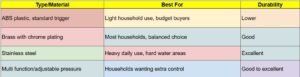
- Stainless steel: Highly resistant to corrosion and generally the most durable option. Slightly heavier in hand, which some users prefer for a sturdier feel.
- Brass with chrome plating: A strong middle ground, offering good durability at a lower price point than stainless steel, as long as the chrome plating is good quality.
- ABS plastic: The most budget friendly option. Lightweight and fine for lower usage households, but more prone to cracking over time and less resistant to hard water buildup.
Common mistake: Choosing based on shine and appearance alone. Cheaper chrome plated plastic can look identical to brass or stainless steel in photos, but the difference becomes clear within months of regular use, especially with Saudi Arabia’s hard water.
Best practice: If your household uses the health faucet frequently or your water is hard, stainless steel or good quality brass is worth the extra cost over plastic.
Key Features to Look For
- Anti-clog nozzle holes: Prevent mineral buildup from blocking spray holes over time, especially important in hard water areas.
- Comfortable trigger design: A trigger that requires less hand pressure is more comfortable for repeated daily use, particularly for elderly users or those with limited hand strength.
- Hose length and flexibility: A properly sized, flexible hand spray hose gives more reach without straining to use.
- Leak proof hose connectors: Poor quality connectors are one of the most common failure points, leading to slow leaks at the joint over time.
- Wall bracket quality: A sturdy, well positioned bracket keeps the unit within easy reach and prevents it from swinging or falling.
How to Choose the Right Health Faucet for Your Bathroom
Step 1: Consider your water pressure. Most health faucets work fine with standard home water pressure, but very low pressure homes may benefit from a model specifically designed for lower flow.
Step 2: Check your existing plumbing connection. Health faucets typically connect via a standard threaded fitting, but it’s worth confirming this matches your existing bathroom plumbing before buying, especially with imported brands.
Step 3: Decide on material based on usage and water hardness. Higher usage households or hard water areas should lean toward brass or stainless steel over plastic.
Step 4: Match hose length to your bathroom layout. A larger bathroom or a toilet positioned further from the wall mount may need a longer hose for comfortable use.
Step 5: Compare warranty terms. A basic warranty of at least one year is reasonable to expect, and longer warranties often signal better build confidence from the manufacturer.
Comparison Table: Health Faucet Types
Step by Step Installation Guide
- Turn off the water supply to the toilet area before starting.
- Remove any existing cap or fitting on the designated connection point, usually near the toilet’s flush pipe or a dedicated wall outlet.
- Wrap the threaded connection with plumber’s tape to prevent leaks.
- Attach the health faucet’s hose connector to the water supply point and tighten by hand, then slightly more with a wrench, without overtightening.
- Mount the wall bracket at a comfortable height next to the toilet.
- Turn the water supply back on and test for leaks at the connection point.
- Test the trigger spray to confirm even water flow and no unusual dripping from the nozzle.
This same process applies whether you’re fitting a single unit or working through a bathroom renovation. For a broader look at fitting placement and supply line planning, our wall mounted faucet installation guide covers the same principles contractors and MEP engineers use across a bathroom.
Common mistake: Overtightening the connection in an attempt to prevent leaks. This can damage the threading and cause leaks instead of preventing them.
Best practice: If you’re not comfortable with basic plumbing tools, this is a quick, inexpensive job for a plumber, usually taking 15 to 30 minutes.
Common Buying Mistakes
- Choosing based on price alone: The cheapest option often uses lower grade plastic that cracks or discolors within a year.
- Ignoring hose length: A hose that’s too short leads to an uncomfortable stretch every time it’s used.
- Not checking connector compatibility: Some imported models use different thread standards than local plumbing fittings.
- Overlooking the trigger mechanism: A stiff, hard to squeeze trigger becomes a daily annoyance, especially in households with children or elderly users.
- Skipping the warranty check: Health faucets see daily use, so a weak or missing warranty is a bigger risk than it seems at purchase time.
Maintenance Tips
- Wipe the nozzle after use if your water is hard, to reduce mineral buildup over time.
- Soak the nozzle head in white vinegar occasionally if you notice weakening spray pressure. The same buildup issue is covered in more detail in our guide on why water isn’t coming out of a faucet, since hard water affects every fixture in a Saudi bathroom the same way.
- Check the hose connector every few months for slow leaks, which are often easy to miss since they occur behind the toilet.
- Replace the washer inside the connector if you notice dripping, a simple and inexpensive fix that resolves most leaks.
Frequently Asked Questions
- What does health faucet mean exactly? A health faucet is a handheld spray fixture, connected to your bathroom’s water supply, used for personal hygiene after using the toilet. The name refers to its use for hygiene purposes rather than any technical function.
- Is a health faucet the same as a bidet? It depends on context. In most everyday use, “health faucet,” “jet spray,” and “bidet spray” all refer to the same handheld fixture. A standalone bidet or bidet attachment is a different, separate fixture entirely.
- Does a health faucet need electricity to work? No. A standard health faucet works purely through your home’s existing water pressure and requires no electrical connection, unlike some electronic bidet seats.
- Is a health faucet more hygienic than toilet paper? Many people find water cleaning more thorough, though this comes down to personal preference. Many households use both together rather than choosing one exclusively.
- Can I install a health faucet myself? Yes, in most cases, if you have basic plumbing tools and are comfortable working with water supply connections. If you’re unsure, it’s a quick and affordable job for a plumber.
- What material health faucet lasts the longest? Stainless steel generally offers the best long term durability, followed by brass with quality chrome plating. ABS plastic is the most budget friendly but least durable option.
- Why does my health faucet’s spray feel weak? This is usually caused by mineral buildup blocking the nozzle holes, especially in hard water areas. Soaking the nozzle in vinegar often restores normal flow.
- How long should a good health faucet last? A good quality brass or stainless steel health faucet with proper maintenance can reasonably last several years, while budget plastic models often need replacing much sooner.
- What hose length should I choose for a health faucet? A standard length works comfortably for most bathroom layouts, with longer hoses available for larger bathrooms or awkward toilet positioning.
- Do health faucets fit any toilet? Most health faucets use a standard threaded connection compatible with common plumbing setups, but it’s worth confirming compatibility with your specific fittings before buying, especially with imported brands.
Conclusion
A health faucet is simply a handheld spray fixture used for personal hygiene near the toilet, and despite the confusing name, it’s a straightforward, water efficient fixture once you understand what it actually does. The real decision comes down to material, since stainless steel and quality brass will outlast budget plastic by years, and a few small features like anti-clog nozzles and hose length that genuinely improve daily comfort.
Your next steps:
- Decide on a material based on your usage and water hardness.
- Check hose length against your bathroom layout.
- Confirm connector compatibility with your existing plumbing.
- Browse Kanzotech’s hand spray sets and hand spray heads, or explore the full accessories range for matching hoses and fittings.
Still not sure which health faucet fits your bathroom or project? Contact Kanzotech Faucets for guidance on the right fixture and bulk supply options.



 August 20, 2026
 HYZAM KENZ



Comments
No comments yet. Be the first to comment!