


Sanitary Ware vs. Sanitary Fittings: What’s Actually the Difference?


Introduction
Walk into any bathroom supply store or browse a construction tender document, and you’ll see both terms thrown around constantly, often as if they mean the same thing. “Sanitary ware,” “sanitary fittings,” sometimes even “sanitaryware” as one word. If you’ve ever paused mid-sentence trying to figure out which one you’re actually supposed to be sourcing, you’re not alone, and the confusion is common enough that it’s worth a clear, direct answer.
This guide breaks down exactly what separates sanitary ware from sanitary fittings, gives concrete examples of each, and explains why getting the distinction right actually matters when you’re planning a bathroom, writing a procurement list, or reading a project specification.
The Short Answer
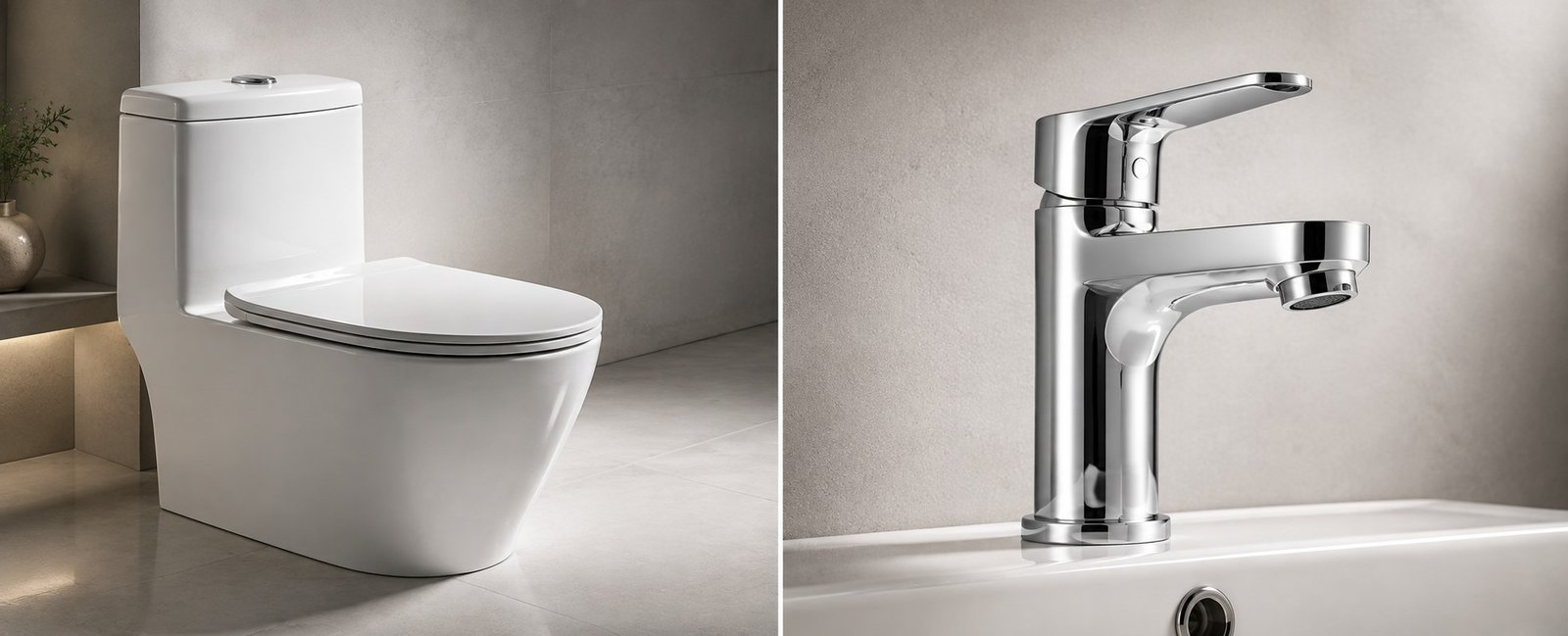
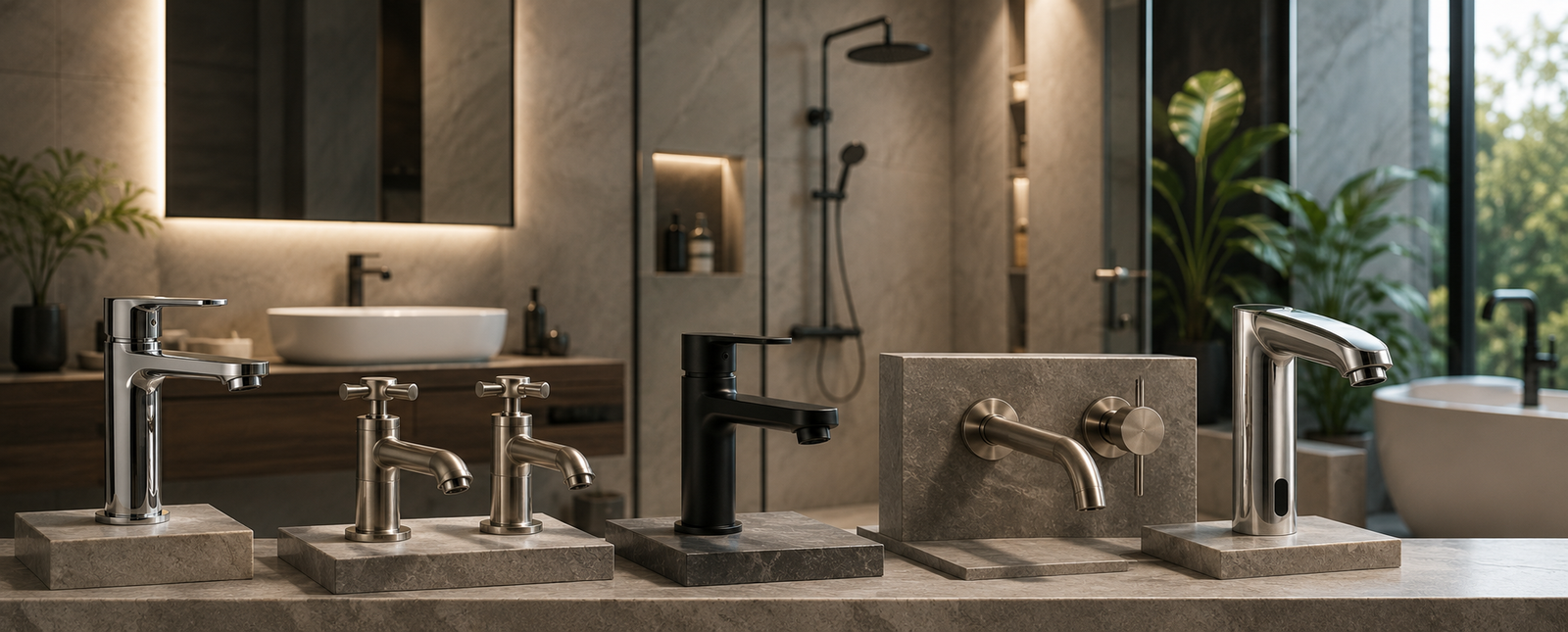
Sanitary ware refers to the fixed, ceramic or similar hard-bodied fixtures in a bathroom, toilets, wash basins, bathtubs, urinals, and bidets. Sanitary fittings refers to the fixtures and hardware that control water flow and connect to those pieces, faucets, mixers, shower heads, valves, and related accessories.
Why it matters: In simple terms, sanitary ware is the fixture itself, and sanitary fittings are what make water actually flow into and out of it. A wash basin is sanitary ware. The mixer tap installed on that basin is a sanitary fitting.
Sanitary Ware: Definition and Examples
Why it matters: Sanitary ware is typically made from vitreous china, ceramic, or similar hard, non-porous materials, chosen specifically because they’re durable, easy to clean, and resistant to staining and bacterial buildup in a bathroom environment.
Common examples of sanitary ware:
- Toilets and water closets (WCs)
- Wash basins and sinks
- Bathtubs
- Urinals
- Bidets
- Wall-hung or pedestal basin units
Practical example: If you’re picturing the large, fixed ceramic pieces that stay in one place once installed, the toilet bowl, the basin bowl itself, the tub, that’s sanitary ware.
Sanitary Fittings: Definition and Examples
Why it matters: Sanitary fittings are the functional hardware layered onto sanitary ware, or connected to it, controlling how water moves in and out. Unlike sanitary ware, these are typically metal, brass, or chrome plated components, built around moving parts like handles, cartridges, and valves.
Common examples of sanitary fittings:
- Kitchen and bathroom faucets or mixers
- Basin mixers and bath mixers
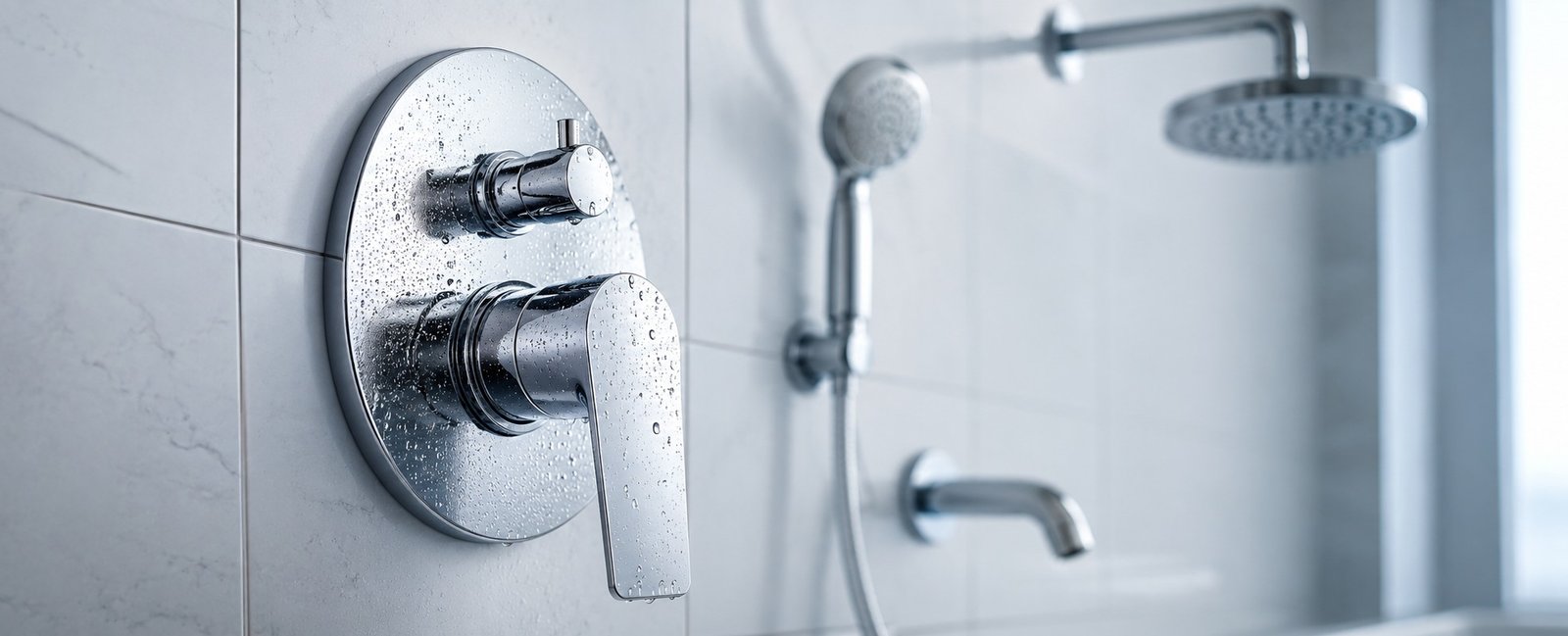
- Shower mixers and shower heads
- Health faucets and hand spray sets
- Flush valves and cisterns’ internal fittings
- Angle valves and shut-off valves
- Flexible hoses and connectors
Practical example: The lever you turn to get water flowing into that basin, the shower mixer on the wall, the hand spray beside the toilet, these are all sanitary fittings. If it’s the metal component you physically operate to control water, it’s a fitting, not sanitary ware.
Why the Confusion Happens
Why it matters: Part of the mix-up comes from how these products are sold and displayed. Bathroom showrooms often merchandise sanitary ware and sanitary fittings together, since a customer buying a new basin is also buying the mixer to go with it. Over time, that pairing in the shopping experience has blurred the terminology in everyday conversation, even though the products themselves, and the industries that manufacture them, are quite distinct.
There’s also a regional language factor. In some markets, “sanitaryware” gets used as a catch-all term for the entire bathroom fixtures category, fittings included, which only adds to the ambiguity when you’re trying to source specifically.
Common mistake: Writing a procurement or tender specification that lumps “sanitary ware and fittings” into a single vague line item, which leads to confusion later about which supplier is responsible for which part of the order.
Side-by-Side Comparison

Why This Distinction Actually Matters
Why it matters: Beyond simple vocabulary, understanding the difference has real, practical implications.
- Procurement accuracy. A tender or purchase order that clearly separates sanitary ware from sanitary fittings gets routed to the right suppliers faster, since these are typically different manufacturers entirely.
- Budgeting. Sanitary ware and sanitary fittings often have very different price points and replacement cycles. A basin might last decades, while a mixer’s internal cartridge may need replacing well before that.
- Renovation planning. If you’re only replacing fittings, and not the ware itself, knowing the distinction helps you scope the project correctly and avoid over-ordering.
- Specification documents. Architects and consultants writing detailed project specs need this distinction to be precise, since sanitary ware and sanitary fittings frequently come from entirely different supplier categories, even on the same project.
A Quick Way to Remember It
Best practice: If it’s ceramic and stays fixed once installed, it’s sanitary ware. If it’s metal, has a handle or lever, and controls water flow, it’s a sanitary fitting. When in doubt, ask whether the item has moving parts, sanitary ware doesn’t, sanitary fittings do.
This same kind of terminology clarity matters elsewhere in bathroom fixtures too. Our guide on what a health faucet actually is covers a similar naming confusion specific to that one fitting.
Frequently Asked Questions
- Is a toilet considered sanitary ware or a sanitary fitting? A toilet, specifically the ceramic bowl and cistern body, is sanitary ware. The flush mechanism, valves, and any attached hand spray are sanitary fittings.
- Is a faucet sanitary ware or a sanitary fitting? A faucet is a sanitary fitting. It’s the functional hardware that controls water flow, not a fixed ceramic fixture.
- What are some common examples of sanitary ware? Toilets, wash basins, bathtubs, urinals, and bidets are the most common examples of sanitary ware.
- What are some common examples of sanitary fittings? Faucets, mixers, shower heads, health faucets, valves, and flexible hoses are all common sanitary fittings.
- Why do people often confuse sanitary ware with sanitary fittings? The two are frequently sold and displayed together in bathroom showrooms, and in some regions “sanitaryware” is used loosely as a catch-all term for the whole bathroom fixtures category, which blurs the distinction in everyday use.
- Do sanitary ware and sanitary fittings usually come from the same manufacturer? Not usually. Sanitary ware is typically produced by ceramics manufacturers, while sanitary fittings, like faucets and mixers, come from specialized fittings manufacturers such as Kanzotech Faucets.
- Why does this distinction matter for a renovation project? Knowing whether you’re replacing sanitary ware, sanitary fittings, or both helps you scope the project accurately, budget correctly, and order from the right suppliers without confusion.
- Is a shower head sanitary ware or a sanitary fitting? A shower head is a sanitary fitting, since it’s a functional component controlling water flow rather than a fixed ceramic fixture.
Conclusion
Sanitary ware and sanitary fittings get used interchangeably far more often than they should, but the distinction is straightforward once it’s spelled out: sanitary ware is the fixed, ceramic fixture, the toilet, the basin, the tub, while sanitary fittings are the functional hardware, the faucets, mixers, and valves, that actually control water flow. Getting this right makes procurement, budgeting, and renovation planning noticeably smoother, especially on any project where the two come from different suppliers entirely.
Your next steps:
- Review your project or shopping list and separate sanitary ware items from sanitary fittings.
- Source each category from the right specialist supplier rather than treating them as one line item.
- Browse Kanzotech’s full range of sanitary fittings, including single lever mixers, double handle mixers, and bathroom accessories.
Sourcing sanitary fittings for a residential, commercial, or hospitality project? Contact Kanzotech Faucets for bulk pricing and technical guidance.






Comments
No comments yet. Be the first to comment!