


How to Clean Faucets the Right Way For Every Finish


How to Clean Faucets the Right Way For Every Finish, Every Home
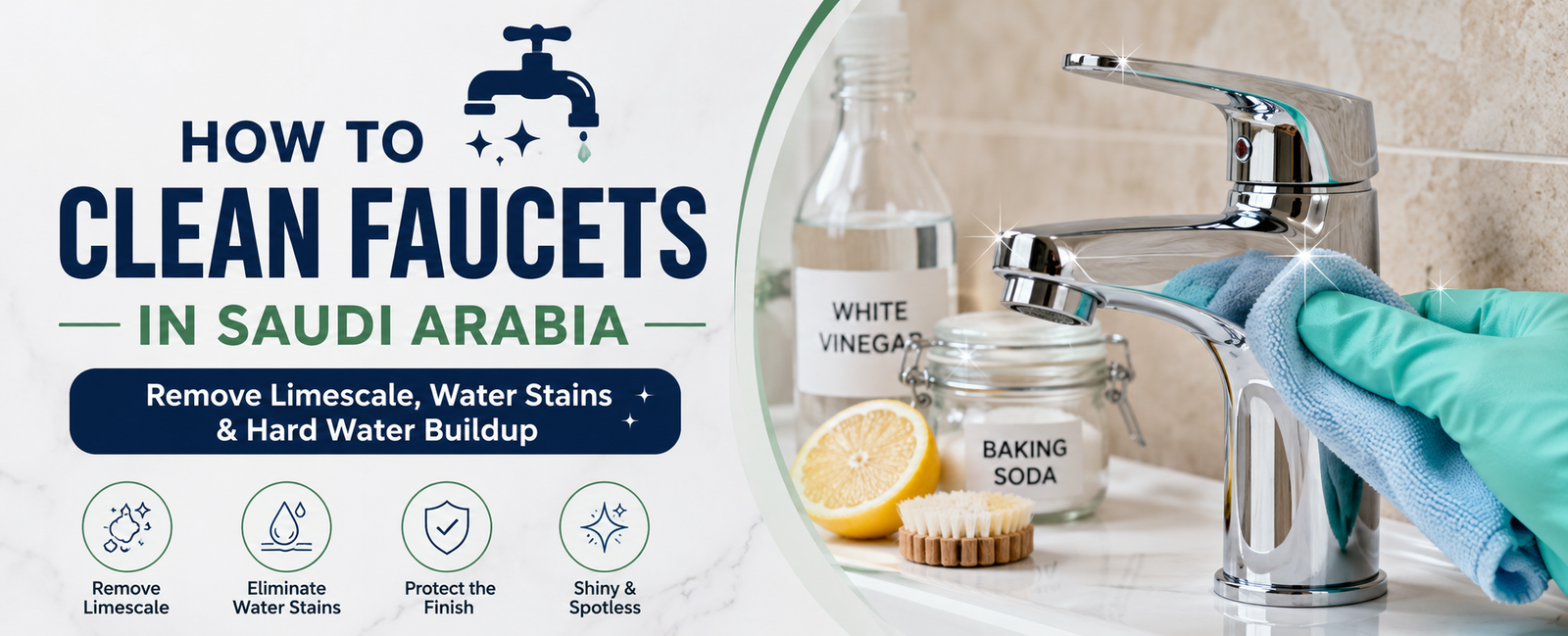
Chrome, brass, brushed nickel, matte black each finish cleans differently. Get it wrong and you damage the surface permanently. This guide covers exactly what to use, what to avoid, and how often to do it with specific advice for Saudi Arabia’s hard water conditions.
Most people clean their faucets the same way they clean everything else a spray of whatever’s under the sink, a quick wipe, and done. That approach works fine on tiles. On faucet finishes, it’s quietly destroying the surface. I’ve seen chrome faucets go dull within six months of installation, not from hard water but from someone using bathroom bleach spray on them every week. The fix isn’t expensive or complicated. It just requires knowing which finish you have and what actually works on it.
Quick Answer
“To clean a faucet: wipe the exterior with a damp microfiber cloth and a few drops of mild dish soap. For mineral deposits, soak a cloth in equal parts white vinegar and water, wrap it around the spout, and leave for 30–60 minutes. Scrub crevices with a soft toothbrush, rinse thoroughly, and dry immediately with a dry cloth. Never let water air-dry on any faucet finish — that’s what causes spots and scale buildup in the first place.”
Why Cleaning Your Faucet Actually Matters
- A faucet that looks dirty is one problem. A faucet that’s been chemically damaged by the wrong cleaner is a different, more expensive one. There are three real reasons to stay on top of faucet cleaning and none of them are purely aesthetic.
- Mineral scale affects function, not just looks. In Saudi Arabia, where the tap water has significant calcium and magnesium content, limescale builds up inside the aerator mesh within weeks. Once it restricts flow, water pressure compensates by pushing harder against the O-rings and cartridge seals, accelerating internal wear. Regular cleaning is, in effect, regular maintenance.
- Wrong cleaning products void warranties. Every major faucet manufacturer from Hansgrohe to Moen to our own KanzotechFaucets range – specifies which cleaners are safe for their finishes. Using bleach or acid-based bathroom sprays, even occasionally, can void your warranty and strip protective coatings that aren’t replaceable.
- Bacteria accumulates in the aerator. The mesh screen at the spout end is a warm, wet, dark space where biofilm forms. This has nothing to do with the finish and everything to do with hygiene. It’s worth cleaning separately on its own schedule.
What You’ll Need
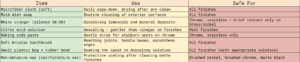
You probably already have most of this. The one thing people most often lack is a dedicated microfiber cloth for the faucet not the same one used for the sink basin.
Saudi Arabia Note
“Citric acid (حامض الستريك) is widely available in Saudi supermarkets and is arguably better than vinegar for descaling in hard water areas — it’s more effective at dissolving calcium carbonate without the sharp smell, and it’s gentler on delicate finishes like brushed nickel and gold-toned taps.”
Step-by-Step: How to Clean a Faucet
This is the full process , the one worth doing once a month if you have hard water, or every six to eight weeks in a softer supply area. Daily maintenance is far simpler (see the schedule section below).
Start with a general exterior wipe
Dampen a microfiber cloth with warm water and add a couple of drops of mild dish soap. Wipe the entire faucet , body, handle, base plate, and spout in gentle circular motions. This removes soap residue, toothpaste (on bathroom taps), cooking grease, and fingerprints before you address anything else.
“Never spray cleaner directly onto the faucet. Apply it to the cloth first. Direct spraying pushes liquid into joints and handle mechanisms where it’s hard to rinse out.”
Identify and target mineral deposits
Look for white or off-white chalky crust around the spout tip, the base where the faucet meets the sink, and around the handle joints. This is limescale from hard water. Fill a small plastic bag halfway with a 50:50 mix of white vinegar and water (or a citric acid solution), secure it over the spout with a rubber band, and leave it for 30–60 minutes. For light buildup, 15 minutes is enough. For heavy crust, go the full hour.
Scrub crevices with a soft toothbrush
After soaking, remove the bag and use a soft toothbrush dipped in the same solution to scrub any remaining deposits, particularly around the base, behind the handle, and along any decorative ridges. Gentle pressure is all that’s needed , the vinegar or citric acid has already done the chemical work. Scrubbing hard risks scratching the finish.
Clean the aerator separately
Unscrew the aerator cap from the spout tip by hand or with a cloth-wrapped wrench. Disassemble it , most have 2–3 mesh screens and a rubber washer. Soak all pieces in vinegar solution for 20–30 minutes, then rinse under running water and use a toothbrush to clear any remaining sediment. Reassemble and screw back on hand-tight. (More detail on this in the aerator section below.)
In Saudi Arabia, aerators can clog noticeably within 4–6 weeks. If your tap has reduced flow, clean the aerator before assuming anything is wrong with the tap itself.
Rinse everything thoroughly
Use a clean damp cloth to rinse all surfaces, removing every trace of the cleaning solution. For vinegar especially, any residue left to dry can cause white marks of its own , the opposite of what you were trying to achieve. Run the tap for 30 seconds after cleaning to flush through any solution that entered the spout.
Dry immediately and completely
This step is non-negotiable. Use a dry microfiber cloth to wipe every surface dry. Air-drying lets water evaporate and leaves behind whatever minerals were dissolved in it recreating the very deposits you just removed. In Saudi Arabia’s climate, water evaporates faster than in most places, which means mineral concentration on the surface is higher. Always dry.
Cleaning by Faucet Finish Type
The single biggest mistake people make is treating all faucets the same. Chrome and matte black require completely different approaches. Here’s exactly what to do and what to avoid for each major finish type.
Polished Chrome
The most forgiving finish to clean. Chrome is hard and resists acids well — but it shows every water spot and fingerprint.
- Daily: Dry microfiber wipe
- Weekly: Mild soap + warm water
- Monthly: Diluted vinegar soak for scale
✓ Vinegar, mild soap, citric acid
✗ Bleach, abrasive pads, ammonia
Polished Brass
Brass is beautiful but demands careful handling – especially unlacquered brass which oxidises naturally over time.
- Daily: Soft cloth, dry immediately
- Weekly: Mild soap only
- Monthly: Brass-specific cleaner
✓ Mild dish soap, brass polish
✗ Vinegar (strips lacquer), bleach, acid
Brushed Nickel
Hides fingerprints better than chrome, but the brush texture traps mineral deposits that need a light touch to remove.
- Daily: Dry wipe after use
- Weekly: Soap + water in direction of grain
- Monthly: Brief citric acid, rinse fast
✓ Mild soap, diluted citric acid, wax
✗ Abrasive scrubbers, strong acids
Matte Black
The most popular finish right now and the most easily damaged by wrong cleaning. The matte texture is powder-coated and sensitive to abrasion.
- Daily: Dry cloth after every use
- Weekly: Soap + water only
- Monthly: Non-abrasive wax to protect
✓ Mild soap, non-abrasive wax
✗ Vinegar, bleach, any abrasive

How to Clean a Faucet Aerator
The aerator is the unsung hero of water flow. It mixes air into the water stream, reduces splash, and saves water. It also collects more mineral sediment than any other part of the faucet and most people never clean it. In Saudi Arabia, a clogged aerator can reduce flow by 40–60% before anyone notices something is wrong.
How to remove and clean the aerator
Locate the aerator – it’s the small cap screwed onto the spout tip. Some unscrew easily by hand; others need gentle encouragement with a cloth-wrapped adjustable wrench.
Disassemble it – there are typically 2–3 mesh screens and a rubber washer inside. Keep them in order; a quick phone photo helps with reassembly.
Soak in vinegar solution – 20–30 minutes in a 50:50 vinegar-water mix dissolves most deposits. For heavy buildup, go up to an hour.
Scrub with a toothbrush – work gently through the mesh to clear any remaining sediment. Hold the screen up to the light to confirm the holes are clear.
Rinse and reassemble – rinse under running water, reassemble in the correct order, and screw back on hand-tight. Overtightening damages the threads.
Low water pressure? Start here
“Before calling a plumber about low tap pressure, clean the aerator. It’s the most common cause of reduced flow in Saudi homes and takes five minutes to fix. If flow doesn’t improve after cleaning, the issue is further upstream.”
Cleaning Faucets in Saudi Arabia’s Hard Water Conditions
Saudi Arabia’s water supply , whether desalinated or from ground sources , has high Total Dissolved Solids (TDS) and significant calcium and magnesium content. This means limescale builds up faster here than in most parts of the world, and the standard “clean once a month” advice from European or American faucet brands simply isn’t calibrated for this environment.
Here’s what the local reality looks like: in a Riyadh villa with no water softener, a brand new chrome tap can show visible mineral deposits within two to three weeks of installation. An aerator can partially clog within six weeks. These aren’t signs of a bad faucet — they’re signs of hard water. The same faucet in a European city with soft water might go six months before showing any scale.
Practical adjustments for Saudi homes
- Daily dry-wipe is non-negotiable. This removes water from the surface before it evaporates and leaves mineral residue. It takes 10 seconds and prevents most of what people struggle to remove later.
- Clean aerators every 4–6 weeks, not the annually that most Western brands suggest. In hard water areas, monthly is more realistic.
- Use citric acid over vinegar where possible , it’s more effective against Saudi tap water’s specific mineral composition and easier on sensitive faucet finishes. Mix 1 tablespoon of citric acid powder to 500ml of water.
- Consider an inline water filter or softener on the supply lines. This reduces the mineral load on every tap and appliance in the home simultaneously, extending the lifespan of all your plumbing fixtures.
- Choose faucets designed for hard water. Ceramic disc cartridges handle mineral deposits far better than rubber washer mechanisms. All KanzotechFaucets products use ceramic disc technology specifically for this reason.
What Never to Use on a Faucet
The damage list is important. Many bathroom cleaners that are perfectly fine on ceramic tiles will destroy faucet finishes with repeated use — and the damage often isn’t visible immediately, which makes it easy to assume the product is safe.
Products that damage faucet finishes
“Bleach and bleach-based sprays (Dettol, most bathroom cleaners), ammonia-based glass cleaners (Windex), abrasive powders and scouring pads, steel wool of any grade, full-strength acids (hydrochloric, phosphoric), nail polish remover (acetone), and alcohol-based solvents. These strip protective coatings, discolour finishes, and in most cases void the manufacturer’s warranty.”
The Hansgrohe quality lab – one of the most rigorous in the industry – explicitly advises against vinegar, formic acid, sodium hydroxide, chlorine bleach, phosphoric acid, and hydrochloric acid for their finishes. They recommend citric acid as the safest active descaling ingredient. That’s a useful benchmark from a company that has tested essentially every cleaner on the market.
One practical note on over-tightening: many people tighten the aerator or handle harder after cleaning, thinking it prevents drips. It doesn’t — and it damages internal seals. Finger-tight is sufficient for the aerator. If a drip persists after cleaning, the issue is internal (washer or cartridge), not the cleanliness of the exterior.
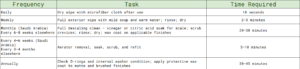
Faucet Cleaning Maintenance Schedule
The most efficient approach is treating different tasks at different frequencies, rather than doing one exhaustive clean infrequently.
Key Takeaways
- Clean your faucet by finish type , matte black and brass need completely different treatment to chrome and stainless.
- Always dry the faucet after cleaning. Air-drying re-deposits the very minerals you just removed.
- In Saudi Arabia, clean aerators every 4–6 weeks, not annually. Hard water blocks them fast.
- Citric acid is gentler and more effective than vinegar for Saudi tap water mineral composition.
- Never use bleach, ammonia, or abrasive pads on any faucet finish — damage is often irreversible.
- A ceramic disc faucet handles mineral deposits better than rubber washer types — worth considering at replacement time.
- Preventive maintenance , daily dry-wipe , eliminates most cleaning effort entirely.
Frequently Asked Questions
1.How do I clean faucets with hard water stains?
Soak a cloth in equal parts white vinegar and water, wrap it around the stained area, and leave for 30–60 minutes. For heavy buildup, a citric acid solution (1 tablespoon to 500ml water) works faster and is gentler on finishes. After soaking, scrub lightly with a soft toothbrush, rinse completely, and dry immediately. Do not use undiluted vinegar or leave acid solutions on the surface beyond the soak time
2.Is it safe to use vinegar to clean all faucet finishes?
No – diluted vinegar (50:50 with water) is reasonably safe for chrome and stainless steel with brief contact time. It should not be used on polished brass, oil-rubbed bronze, matte black, or unlacquered brass – it strips lacquer and protective coatings. For brushed nickel and gold tones, a brief contact of under 5 minutes is the maximum, followed by an immediate thorough rinse. Citric acid is a safer alternative across most finishes
3.How often should I clean my faucet in Saudi Arabia?
A quick dry-wipe after each use takes 10 seconds and prevents most buildup. A weekly soap-and-water clean handles the rest. In Saudi Arabia’s hard water conditions, a full descaling clean every four to six weeks is realistic – significantly more frequent than the monthly-to-bimonthly schedules suggested for softer water regions. Aerators specifically should be cleaned every four to six weeks rather than quarterly or annually.
4.What should I never use to clean a faucet?
Avoid bleach and bleach-based bathroom cleaners, ammonia-based glass cleaners, abrasive powders, steel wool, full-strength acids (hydrochloric, phosphoric), acetone, and alcohol-based solvents. These either strip the finish chemically, scratch it physically, or penetrate into internal seals and joints where they cause corrosion over time. Most also void the manufacturer’s warranty.
5.How do I clean a matte black faucet without damaging the finish?
Matte black is a powder-coated finish that’s sensitive to acids, abrasives, and anything that leaves streaks. Clean with only mild dish soap and warm water on a soft microfiber cloth. Rinse with clean water and dry immediately. Never use vinegar, citric acid, or any acid-based product on matte black. After cleaning, apply a thin coat of non-abrasive furniture or car wax every few months — this creates a protective barrier that makes the next clean far easier.
6.My tap has low water pressure , could that be a cleaning issue?
Almost certainly, yes. Low flow from a single tap is the most reliable symptom of a clogged aerator. Unscrew the aerator cap from the spout tip, disassemble it, and you’ll likely find mineral sediment blocking the mesh screens. Soak in vinegar solution for 20–30 minutes, rinse, refit, and flow should restore immediately. In Saudi Arabia, this happens far more quickly than people expect – sometimes within four to six weeks of installation in a hard water supply area.





Comments
No comments yet. Be the first to comment!