Introduction
Two faucets can look almost identical on a showroom shelf, same finish, same handle, same price bracket and still age completely differently five years into a project. The reason usually comes down to what’s underneath the plating: brass or stainless steel.
This is one of the quieter specification decisions contractors and procurement teams make, and it’s one where getting it wrong doesn’t show up immediately. It shows up two or three years later, in a maintenance callback. Here’s how to get it right the first time, with the water and climate conditions specific to Saudi projects factored in.
What’s Actually Different Underneath
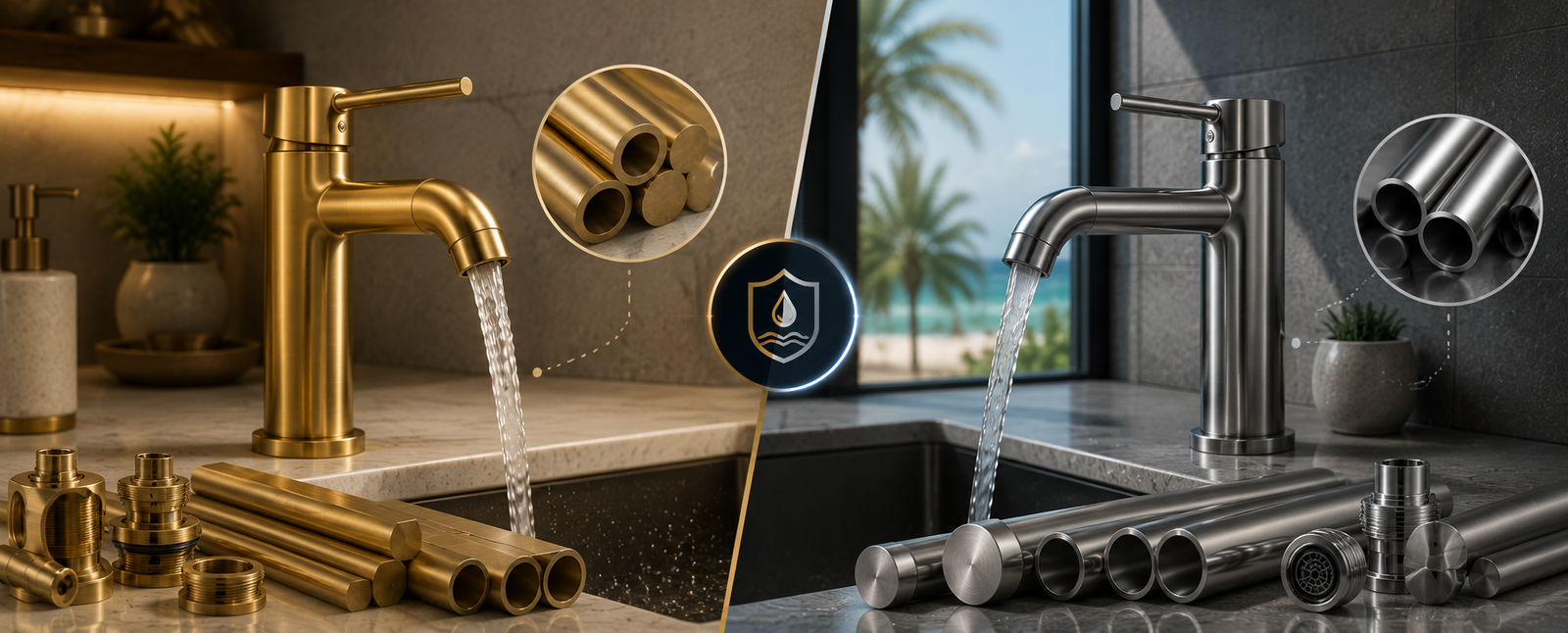
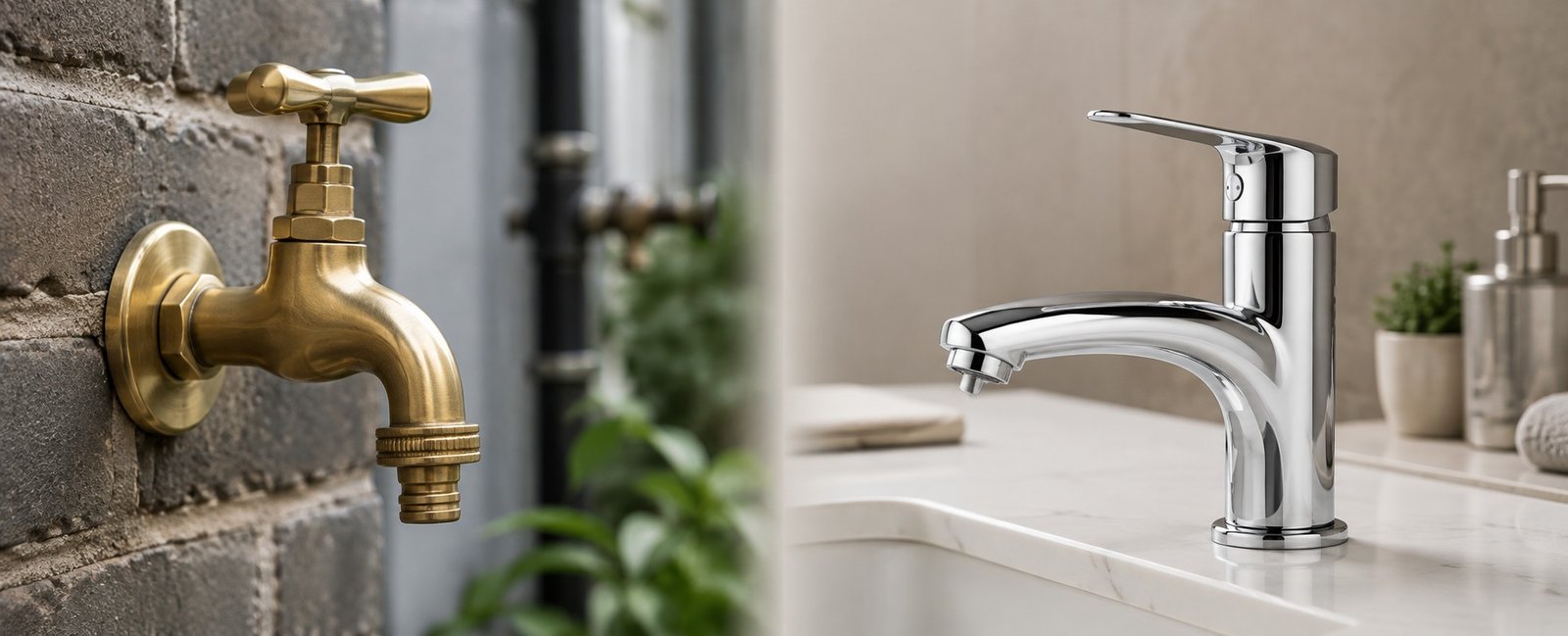
Brass is a copper-zinc alloy, easy to cast into detailed shapes, which is why most decorative faucet finishes, chrome, gold, black, brushed are built on a brass body underneath the plating. Stainless steel is an iron-chromium alloy that resists corrosion through its own surface oxide layer rather than a separate plated finish, which historically made it harder to shape into intricate designs, though that gap has narrowed with modern manufacturing.
The mechanical difference matters less day-to-day than how each material responds to the water passing through it and the air around it, which is where the Saudi-specific factors come in.
The Saudi Water Question, Answered Honestly
Most major Saudi cities run primarily on desalinated water, which is low in the natural minerals responsible for hard-water scale elsewhere. That sounds like a straightforward win for any faucet material and for scale buildup, it generally is.
But there’s a less obvious side to it: very low-mineral water can be more chemically aggressive toward metal than water with some natural hardness, since dissolved minerals normally help form a mild protective layer on metal surfaces. This is part of why municipal treatment typically remineralizes desalinated supply before it reaches the distribution network, rather than delivering it in its raw post-desalination state.
What this means for your project depends on where it is. Coastal cities relying heavily on desalination will have different water chemistry than inland areas drawing more on groundwater, which tends to run harder. Because this varies by city and even by building, it’s worth confirming actual water conditions for your specific site with your MEP consultant, rather than assuming one standard applies across the Kingdom.
Coastal Air Is the Other Variable
Water chemistry isn’t the only factor. In coastal cities, Jeddah, Dammam, Al Khobar, airborne salinity and humidity introduce chloride exposure from a second direction. Chloride, whether from supply water or coastal air, is specifically what drives pitting corrosion in lower-grade stainless steel and dezincification in standard, non-resistant brass alloys.
This matters more for outdoor-adjacent installations, outdoor kitchens, semi-outdoor guest bathrooms, both common in Saudi villa layouts than for fully interior spaces. For those locations, it’s worth asking your supplier specifically about 316-grade stainless steel or DZR-rated (dezincification-resistant) brass rather than the base-grade version of either material.
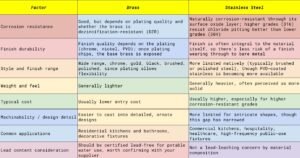
Brass or Stainless Steel: A Quick Snapshot
A Simple Way to Decide
Rather than treating this as brass-versus-steel in the abstract, it’s usually faster to work through three questions:
- Is this a fully interior, standard residential installation? Brass, correctly specified as DZR-rated, is the practical default, better style range, lower cost, and coastal exposure isn’t a factor.
- Is this coastal, outdoor-adjacent, or high-frequency commercial use? Lean toward stainless steel, ideally 316-grade, or a DZR brass if the finish range matters more than the marginal corrosion advantage.
- Does the fixture need to match other brass or stainless pieces already specified for the project? Consistency across a kitchen, bathroom, and accessories often decides this before water chemistry does worth checking existing specifications before finalizing.
Material is a separate decision from handle type and mounting style, both brass and stainless steel are available across single lever and double handle configurations, and across wall mounted and deck mounted designs.
A Common Misconception Worth Correcting
It’s tempting to assume stainless steel is simply “better” across the board, since it doesn’t rely on plating. In practice, a well-plated, DZR-rated brass faucet from a reputable manufacturer will often outlast a poorly made stainless fixture, and vice versa. Grade and build quality within a material category matter more than which material wins on paper, which is really the point of this whole comparison.
Working With Kanzotech Faucets
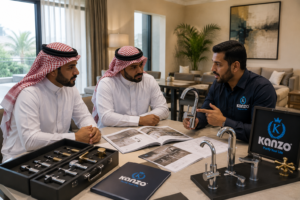
Kanzotech supplies both brass and stainless steel faucets across residential, commercial, and hospitality projects in Saudi Arabia, specified for real water and climate conditions rather than a single generic standard. We work with contractors, MEP engineers, and procurement teams to match material grade to project location and use case, not just style.
If you’re specifying fixtures for a coastal, high-frequency, or otherwise demanding installation, our team can walk through material grade, plating quality, and lead-free certification before your specification is finalized.
Browse our current single lever range or double handle range, or see our full shop for the complete selection.
Frequently Asked Questions
Does brass or stainless steel last longer in Saudi water conditions? Both can last well if the correct grade is specified — DZR brass or 316-grade stainless for coastal or higher-chloride conditions. The bigger risk is choosing a low-quality version of either material, not the material itself.
Is Saudi water hard or soft? It varies by location. Major cities rely primarily on desalinated water, generally low in natural minerals, while some inland areas draw more on groundwater, which can run harder. Confirm actual conditions for your specific project location.
Why would very soft water be a problem for a faucet? Water with very low mineral content can be more chemically aggressive toward metal than water with some natural hardness, since minerals help form a mild protective layer. It’s part of why desalinated water is typically remineralized before distribution.
Is stainless steel always more expensive than brass? Generally yes, especially for higher corrosion-resistant grades. Brass remains the more budget-friendly option for most residential projects, though pricing varies by finish and manufacturer.
Do brass faucets need to be lead-free certified in Saudi Arabia? Brass faucets for potable water use should be certified lead-free. Confirm this directly with your supplier for the specific product being specified rather than assuming it from general market standards.
This guide reflects general material and planning considerations for brass and stainless steel faucets in Saudi kitchen and bathroom applications. Specific water quality conditions, material grade certifications, and code compliance should always be confirmed with a licensed plumber, MEP engineer, or the Kanzotech team for your specific project and location.





 August 20, 2026
 HYZAM KENZ



Comments
No comments yet. Be the first to comment!